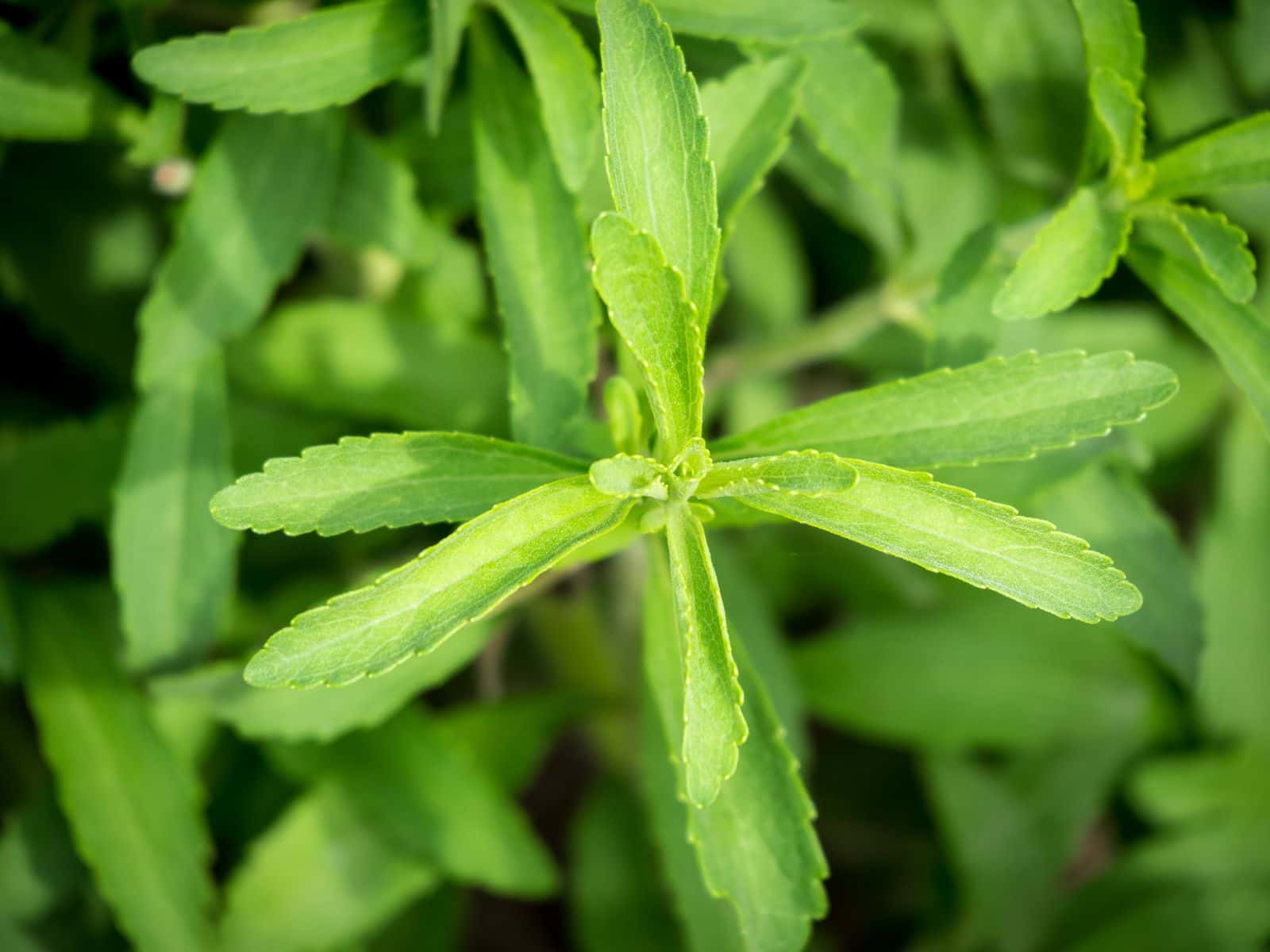
Natural Sweeteners · Stevia
Rebaudioside M (Reb M) Supplier — Bioconversion & Fermentation Grades
Rebaudioside M, a minor stevia glycoside produced at scale by enzymatic bioconversion or fermentation — supplied by ANUTIDA with the route and specification stated.
- PowderForms supplied
- Export from ThailandQuoted on your Incoterm
- COA with every lotSpecification in the quotation
Quick quote
Select a product ICUMSA 45 Refined SugarICUMSA 45Quote
 ICUMSA 150 White SugarICUMSA 150Quote
 VHP Raw SugarRaw cane sugar sold under the VHP (very high polarisation) labelQuote
 Thai Hi-Pol Raw SugarHigh-polarisation raw cane sugarQuote
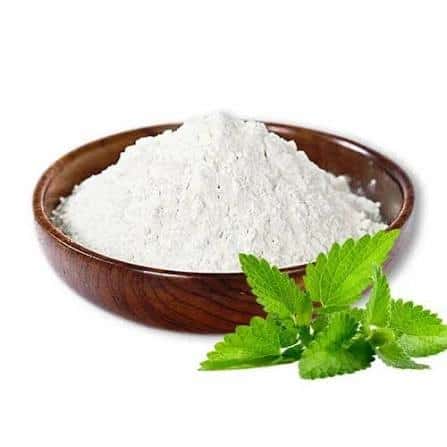 Rebaudioside M (Reb M)Steviol glycoside (high-intensity sweetener)Quote
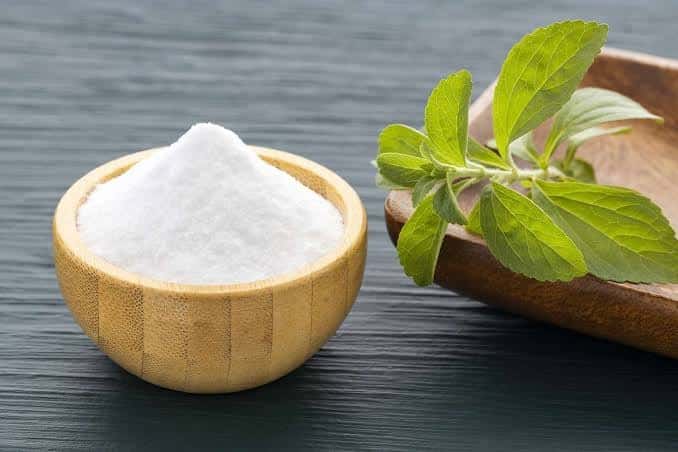 SteviaPlant-derived sweetener (Stevia rebaudiana)Quote
 Steviol GlycosidesHigh-intensity sweetener (food additive)Quote
 Rebaudioside A (Reb A)Steviol glycoside (high-intensity sweetener)Quote
- Thailand basedUdon Thani, Thailand
- Ready stockCommercial supply
- Multiple Thai producersBroad product range
- Global exportShipped from Thailand
- Specification supportCOA with every lot
Natural Sweeteners
Rebaudioside M (Reb M)
Steviol glycoside (high-intensity sweetener)
- Powder
- E 960c(i)
- E 960c(ii)
- Moisture
- ≤ 6 % (105 °C, 2 h)
- pH
- 4.5–7.0
- Ash
- ≤ 1 %
- EU additive no.
- E 960c(i)
Certificate of Analysis with every lot
What is Rebaudioside M (Reb M)?
Rebaudioside M is a steviol glycoside carrying six glucose units — three attached at C-13 and three on the ester of the carboxyl group — with the formula C₅₆H₉₀O₃₃, a molecular weight of 1 291.30 and CAS number 1220616-44-3. It occurs in the stevia leaf only as a minor glycoside. JECFA records that several minor glycosides have more favourable sensory characteristics than the major ones, and that this prompted new technologies to make steviol glycosides with higher proportions of minor glycosides such as Reb M.
- Beverage
- Dairy
- Confectionery
- Food Manufacturing
Key features
- Supplied in powder form
- Food additive identity E 960c(i) / E 960c(ii)
- Specification limits from official standards
- Certificate of Analysis with every lot
- Exported from Thailand on your Incoterm
Technical data
Technical specifications
Powder
Reb M — enzymatic bioconversion (E 960c(i) / E 960c(ii))
Made from purified stevia leaf glycosides (c(i)) or high-purity Reb A (c(ii)) using glucosyltransferase and sucrose synthase enzymes from engineered microorganisms; enzymes removed by heat treatment and separation.
Powder
Reb M — fermentation (E 960b(i), Yarrowia lipolytica VRM)
Produced by fermentation of a simple sugar source with a genetically modified Y. lipolytica strain; viable cells and DNA must not be detected.
| Parameter | Value | Basis |
|---|---|---|
| CAS number | 1220616-44-3 | Standard / official specification |
| Molecular formula | C56H90O33 | Standard / official specification |
| Molecular weight | 1 291.30 g/mol | Standard / official specification |
| Steviol conversion factor (EU) | 0.25 | Standard / official specification |
| Description | White to light yellow powder | Standard / official specification |
| Loss on drying | ≤ 6 % (105 °C, 2 h) | Standard / official specification |
| Total ash | ≤ 1 % | Standard / official specification |
| pH (1 in 100 solution) | 4.5–7.0 | Standard / official specification |
| Residual ethanol | ≤ 5 000 mg/kg | Standard / official specification |
| Rebaudioside M content (lot) | Confirmed per lot on the Certificate of Analysis — contact ANUTIDA for the current specification. | |
Reb M — enzymatic bioconversion (E 960c(i) / E 960c(ii))
| Parameter | Value | Basis |
|---|---|---|
| Assay | ≥ 95 % rebaudioside M, dried basis | Standard / official specification |
| Residual protein | ≤ 5 mg/kg | Standard / official specification |
| Particle size | ≥ 74 µm (mesh #200) | Standard / official specification |
| Lead | ≤ 0.2 mg/kg | Standard / official specification |
| Arsenic / cadmium | ≤ 0.015 mg/kg each | Standard / official specification |
| Mercury | ≤ 0.07 mg/kg | Standard / official specification |
Reb M — fermentation (E 960b(i), Yarrowia lipolytica VRM)
| Parameter | Value | Basis |
|---|---|---|
| Assay | ≥ 95 % rebaudiosides M, D, A and B, dried basis | Standard / official specification |
| Kaurenoic acid | ≤ 0.3 mg/kg | Standard / official specification |
| Residual protein | ≤ 20 mg/kg | Standard / official specification |
| Particles < 300 nm | ≤ 0.5 % | Standard / official specification |
| Arsenic / lead / cadmium | ≤ 0.01 mg/kg each | Standard / official specification |
| Mercury | ≤ 0.05 mg/kg | Standard / official specification |
| Yeasts and moulds | ≤ 100 CFU/g | Standard / official specification |
Identity & status
Regulatory identity
| EU — bioconversion | E 960c(i) (Reg. (EU) 2021/1156) and E 960c(ii) (Reg. (EU) 2022/1922) |
|---|---|
| EU — fermentation | E 960b(i), Yarrowia lipolytica VRM (Reg. (EU) 2025/652) |
| EFSA — fermentation Reb M | No safety concern; ADI 4 mg/kg bw/day (steviol equivalents) applies (2023) |
| EFSA — further processes (2026) | New E. coli enzyme processes assessed with no safety concern; new specification entries recommended, not yet adopted |
| JECFA | 102nd meeting (2026): Reb M from two separate production methods evaluated; ADI 0–4 mg/kg bw as steviol confirmed |
| US GRAS | e.g. GRN 512 (2014), 744 and 759 (2018, fermentation), 1010, 1206, 1260 (bioconversion) — FDA no questions |
| US import | Fermentation-derived steviol glycosides are outside Import Alert 45-06 |
Confirm the route accepted in each destination market before ordering; the EU fermentation entry covers one named Y. lipolytica strain only.
Applications & industries
- Reduced-sugar soft drinks and flavoured waters
- Flavoured dairy products
- Table-top sweeteners
- No-added-sugar confectionery
Packaging, origin and manufacturers
Packaging options
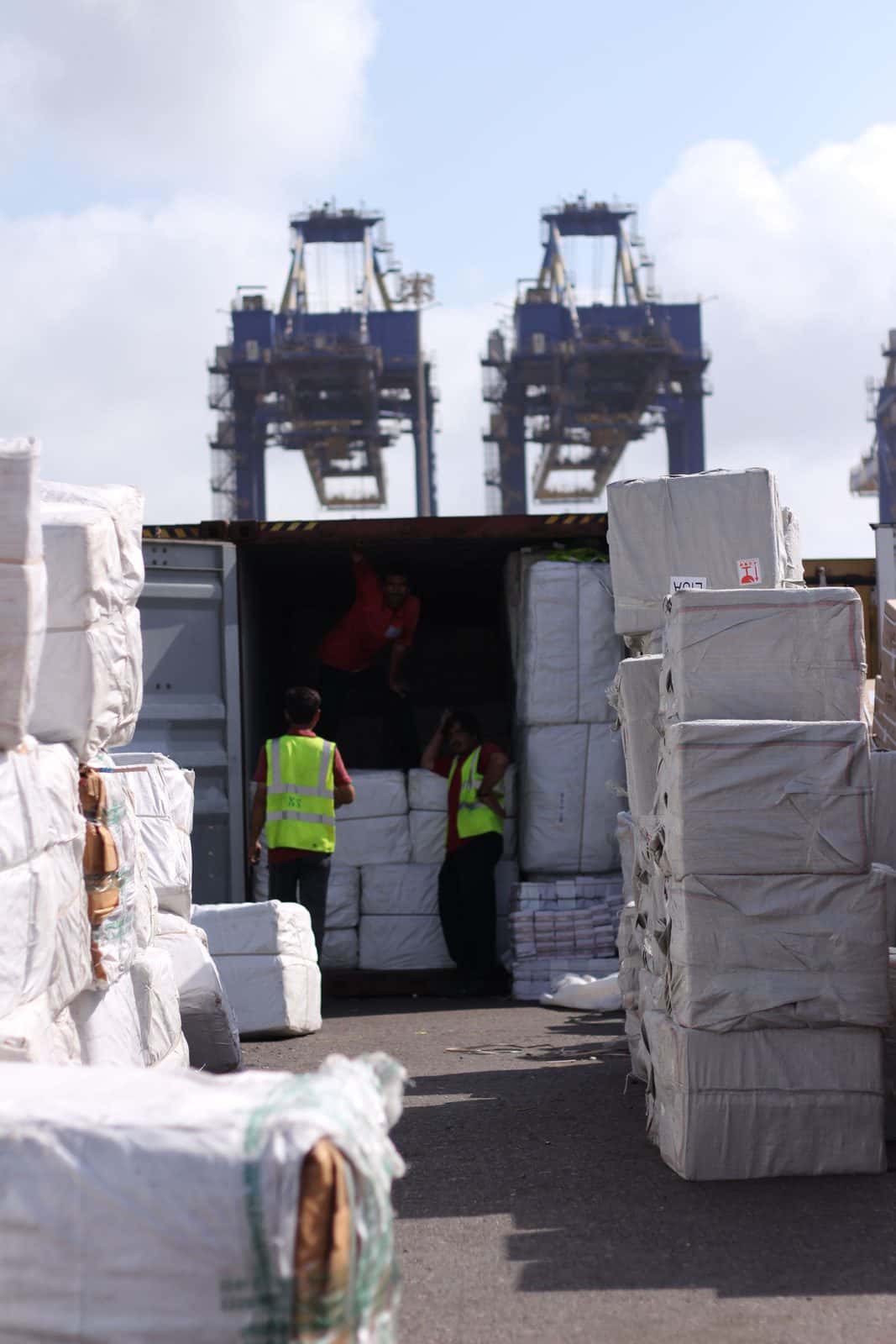
- Packing agreed per order
Documented trade packing for Reb M powder: aluminium foil bags placed inside sealed high-density polyethylene drums. The format available for your order is confirmed in the quotation.
Origin
Stated in the quotation
Each quotation states the origin, producer and specification of the offered lot.
Supplied and exported by ANUTIDA — Udon Thani, Thailand
Manufacturer information
You buy from ANUTIDA. The producer of the offered lot is named in the quotation; state any preferred manufacturer or brand in your request.
Paperwork & shipping
Documentation & export
Each quotation states the specification of the offered product. Export shipments travel with the document set agreed in your contract — typically a commercial invoice, packing list, bill of lading, certificate of origin and a Certificate of Analysis for the lot. List any further documents you need, such as third-party inspection, halal or kosher certificates or a health certificate, and they are confirmed in the quotation. Read how shipping works on the export and logistics pages.
- Minimum order
- Confirmed with quotation
- Lead time
- Confirmed with quotation
- Delivery
- Export from Thailand
Product guide
About Rebaudioside M (Reb M)
Three production routes — and how regulators treat them
The route matters because each one has its own specification, and a grade cleared in one market is not automatically permitted in another.
| Route | How it works | EU | JECFA | US examples |
|---|---|---|---|---|
| Leaf extraction | Reb M purified from leaf extract | Counted among the 11 glycosides of E 960a | Annex 1 (INS 960a) | — |
| Enzymatic bioconversion | Purified leaf glycosides or high-purity Reb A converted with glucosyltransferase and sucrose synthase enzymes | E 960c(i) (from leaf glycosides, K. phaffii enzymes) and E 960c(ii) (from Reb A, E. coli enzymes) | Annex 3 | GRN 1010, 1206, 1260, 1282 |
| Fermentation | Engineered yeast converts simple sugars into steviol glycosides, then purification and crystallisation | E 960b(i) — only Yarrowia lipolytica VRM | Annex 2 (INS 960b) — Y. lipolytica and S. cerevisiae | GRN 744 (S. cerevisiae), GRN 759 (Y. lipolytica) |
In the EU, each route is a separate specification entry. Bioconversion grades must contain at least 95 % Reb M, with residual protein of no more than 5 mg/kg and a minimum particle size of 74 µm. The fermentation entry E 960b(i) counts Reb M, D, A and B together (≥ 95 %) and adds tighter metal limits, a kaurenoic-acid limit and a limit on particles below 300 nm. Because E 960b(i) names one Y. lipolytica strain, a S. cerevisiae fermentation grade accepted in the US does not fit the EU entry. In 2026 EFSA also assessed two further E. coli enzyme processes for Reb M and recommended new specification entries; until these are adopted they are not part of the EU specifications.
JECFA at its 102nd meeting (2026) evaluated Reb M made by two separate methods, found that the production enzymes and proteins were not detected in the purified preparations, and confirmed the ADI of 0–4 mg/kg bw expressed as steviol. In the US, FDA has issued “no questions” letters for Reb M made by bioconversion and by fermentation, among other Reb M notices, and Import Alert 45-06 states that fermentation-derived steviol glycosides fall outside the alert.
Functional properties
- Sweetness — the EU specifications state about 200–350× sucrose for E 960c(i) and E 960b(i), and 150–350× for E 960c(ii), at 5 % sucrose equivalence.
- Solubility — EU: slightly soluble in water for the fermentation grade; freely to slightly soluble for bioconversion grades. Check dissolution in your process.
- Dosing basis — the EU steviol conversion factor for Reb M is 0.25, the lowest of the common glycosides, so more Reb M by weight fits under the same steviol-equivalent limit than Reb A.
Applications
Reb M is used in the same EU food categories as other steviol glycosides — reduced-sugar soft drinks and flavoured waters (beverage), flavoured dairy products (dairy), table-top sweeteners and no-added-sugar confectionery — within each category's steviol-equivalent limit. See the steviol glycosides page for the full family.
What to specify in an RFQ
- Production route (bioconversion, fermentation, leaf) and the matching specification (E 960c(i), E 960c(ii), E 960b(i), JECFA annex).
- Minimum Reb M content and any limits on other glycosides.
- Destination market(s), so the route fits each one.
- Particle size, solubility and any non-GMO or source-organism documentation your customers need.
- Quantity, packaging and documents.
Buyer questions
Rebaudioside M (Reb M) FAQ
Is Reb M extracted from the stevia leaf?
It can be, but it is only a minor leaf glycoside, so Reb M is also made by enzymatic bioconversion of purified leaf glycosides or Reb A (E 960c) and by fermentation (E 960b). The route is stated in the quotation.
Can a US-cleared fermentation Reb M be sold in the EU?
Only if it matches an EU entry. E 960b(i) covers Reb M from one named Yarrowia lipolytica strain; other organisms need their own authorisation.
What purity is Reb M supplied at?
EU bioconversion grades require ≥ 95 % Reb M; the fermentation entry requires ≥ 95 % of Reb M, D, A and B combined. The lot's Reb M content is on the COA.
How is Reb M packed?
Commonly in foil bags inside plastic drums; the format is confirmed in the quotation.
How do I request a quotation?
Use the request-quote form with route, purity, quantity, packaging and destination. MOQ and lead time are confirmed with the quotation.
Last updated 6 October 2026
Related supply
Other Sweeteners You May Be Interested In
- SweetenerSteviol GlycosidesHigh-intensity sweetener (food additive)SpecificationView specification
- SweetenerRebaudioside A (Reb A)Steviol glycoside (high-intensity sweetener)SpecificationView specification
- SweetenerSteviaPlant-derived sweetener (Stevia rebaudiana)SpecificationView specification
 SweetenerMonk Fruit ExtractFruit-derived high-intensity sweetener (mogrosides)SpecificationView specification
Knowledge Center
Related Articles & Resources
- SweetenersReb A vs Reb M vs Reb D: How the Steviol Glycosides CompareThree steviol glycosides, one backbone: how Reb A, Reb M and Reb D differ in structure, production route, EU specification and steviol-equivalent dosing.Read guide
- SweetenersSteviol Glycosides vs Monk Fruit Extract: What Buyers Should KnowStevia-derived steviol glycosides and monk fruit extract compared — composition, grades, sweetness and, above all, where each one may legally be sold.Read guide
 SweetenersDextrose Monohydrate vs Dextrose AnhydrousBoth forms are at least 99.5% D-glucose on a dry basis. The difference is one molecule of crystal water, which changes total solids, dosage and moisture behaviour.Read guide
 SweetenersErythritol vs Xylitol: A Technical Comparison for BuyersErythritol and xylitol are the two crystalline, strongly cooling polyols. They differ in how they are made, how sweet they are and where the law lets you use them.Read guide
Request a quotation
Need Rebaudioside M (Reb M) or Other Sweeteners?
Tell us your product, specification, quantity and destination. ANUTIDA replies with packaging options and a written quotation.