Steviol glycosides and monk fruit extract are both plant-derived high-intensity sweeteners, and both are bought as purified powders specified by the content of their main sweet compound. For an exporter or a brand owner selling into several countries, a key difference is regulatory reach: steviol glycosides are authorised food additives in the EU, have a full JECFA evaluation and are the subject of US GRAS notices, while monk fruit extract is the subject of US GRAS notices but has no EU authorisation.
Where the sweetness comes from
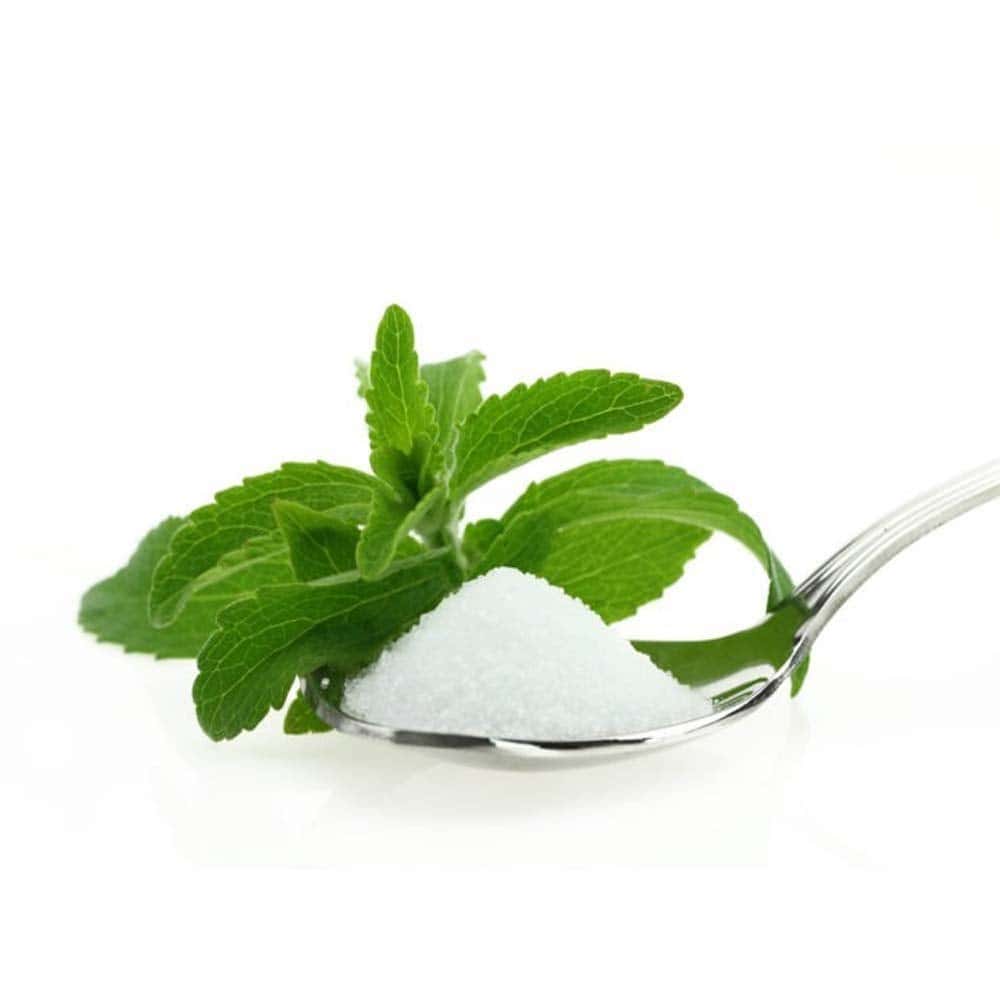
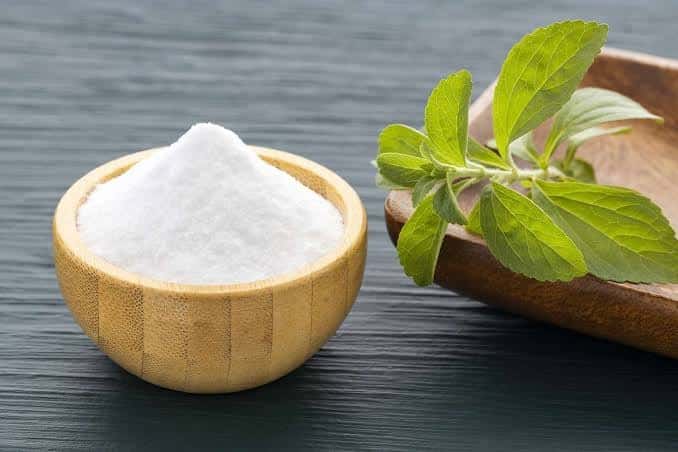
Steviol glycosides come from the leaves of Stevia rebaudiana: glycosides sharing a steviol backbone, of which stevioside and Reb A are the major leaf components. Monk fruit extract comes from the fruit of Siraitia grosvenorii (luo han guo), a member of the cucumber family; its sweet compounds are cucurbitane glycosides called mogrosides, with mogroside V (CAS 88901-36-4) the major one.
Side-by-side comparison
| Parameter | Steviol glycosides | Monk fruit extract |
|---|---|---|
| Source | Stevia rebaudiana leaves (also fermentation and enzymatic routes) | Siraitia grosvenorii fruit |
| Key sweet compounds | Steviol glycosides (Reb A, stevioside, Reb M, Reb D …) | Mogrosides, mainly mogroside V |
| How grades are defined | ≥ 95 % total steviol glycosides; principal glycoside stated | Mogroside V content — 12.5–90 % across early US notices |
| Sweetness vs sugar (FDA) | 200–400× | 100–250×, depending on mogroside content |
| Liquid form | — | Juice concentrate, 10–65 °Brix, ~0.6–3.9 % mogroside V (GRN 784) |
| INS | 960a, 960b (JECFA); 960c, 960d | 970 |
| JECFA | ADI 0–4 mg/kg bw as steviol (2008, confirmed 2026) | Temporary ADI 0–10 mg/kg bw/day as mogroside V; tentative specifications (2026) |
| EU | Authorised additives E 960a–E 960d | No E-number; fruit listed as not-yet-authorised novel food |
| US | GRAS notices for ≥ 95 % grades | GRAS notices for extracts and juice concentrate |
Production and grades
Leaf-extracted steviol glycosides are made by hot-water extraction, resin adsorption, alcohol elution and recrystallisation, giving a white to light-yellow powder of at least 95 % steviol glycosides. Monk fruit extract follows a similar logic: the crushed fruit is extracted in hot water, the extract is passed over an adsorption resin and eluted with aqueous ethanol, then concentrated and spray-dried; further purification steps raise the mogroside V content. FDA records extracts from 12.5 % to 90 % mogroside V in the first four US notices. Lower grades and juice concentrates also carry the fruit's carbohydrates, fibre and protein, so the grade affects both the sweetening power per kilogram and the composition you declare.
Regulatory status by market
- European Union — steviol glycosides are authorised as E 960a–E 960d, with maximum levels expressed as steviol equivalents. Monk fruit extract has no E-number: EFSA concluded in 2019 that the toxicity data were insufficient to assess it as a food additive, and the EU Novel Food Status Catalogue lists the fruit as a not-yet-authorised novel food (monk fruit decoctions are considered not novel).
- United States — FDA had no questions on GRAS notices for both: ≥ 95 % steviol glycosides, and Siraitia grosvenorii fruit extract (GRN 301, 359, 522, 556, 706) and juice concentrate (GRN 627, 784).
- JECFA / Codex — steviol glycosides have a full ADI and established specifications. Monk fruit extract is listed under INS 970 in the JECFA database; at its 102nd meeting (2026) JECFA set a temporary ADI of 0–10 mg/kg bw per day as mogroside V and tentative specifications, and noted that its conservative exposure estimate based on proposed GSFA uses exceeded the temporary ADI.
- Thailand — the Thai FDA regulates steviol glycosides as a food additive under Codex/JECFA specifications.
Formulation considerations
On the FDA's figures, monk fruit extract is generally less intense than steviol glycosides, and its intensity rises with mogroside V content, so compare grades on a sweetness-equivalent basis rather than by weight. Steviol glycoside grades differ by principal glycoside — JECFA notes that several minor glycosides have more favourable sensory characteristics than the major ones, which led to grades richer in minor glycosides such as Reb M. Whichever you choose, run tasting trials in the finished product and confirm that every ingredient in the formula is permitted in each destination market.
What to put in your enquiry
- The ingredient and grade: total steviol glycosides and principal glycoside, or minimum mogroside V content.
- For steviol glycosides, the specification and route (EU E 960a/b/c/d or JECFA annex).
- For monk fruit, the form — powder or juice concentrate with °Brix.
- All destination markets, so legal status can be checked before quotation.
- Quantity, packaging (fibre drums are common for both powders) and documents.
Both ingredients are used in beverages, dairy and other food manufacturing where permitted. For the leaf itself and crude extracts, see stevia.
Frequently asked questions
Can monk fruit extract replace steviol glycosides in EU products?
No. Monk fruit extract has no EU additive authorisation and the fruit is listed as a not-yet-authorised novel food; steviol glycosides are authorised as E 960a–E 960d.
Which is sweeter?
On FDA's figures, steviol glycosides are 200–400 times sweeter than sugar and monk fruit extract 100–250 times, depending on mogroside content.
Has JECFA evaluated monk fruit extract?
Yes, at its 102nd meeting in 2026: a temporary ADI of 0–10 mg/kg bw per day as mogroside V and tentative specifications. The JECFA database lists it under INS 970.
Sources & references
- International organisation(Framework for) Steviol glycosides — specifications monograph, 96th JECFA (2023), FAO JECFA Monographs 31 — Food and Agriculture Organization of the United Nations / JECFA
- International organisationEvaluations of the Joint FAO/WHO Expert Committee on Food Additives (JECFA) — Steviol glycosides — World Health Organization
- International organisationEvaluations of the Joint FAO/WHO Expert Committee on Food Additives (JECFA) — Monk fruit extract — World Health Organization
- RegulatorCommission Regulation (EU) No 231/2012 laying down specifications for food additives — consolidated text of 18 August 2026 — EUR-Lex, Publications Office of the European Union
- RegulatorRegulation (EC) No 1333/2008 on food additives — consolidated text of 18 August 2026 (Annex II) — EUR-Lex, Publications Office of the European Union
- RegulatorEU Novel Food Status Catalogue — Siraitia grosvenorii (luo han guo, monk fruit) — European Commission, Food and Feed Information Portal
- RegulatorEFSA FAF Panel (2019). Safety of use of Monk fruit extract as a food additive in different food categories. EFSA Journal 17(12):5921 — European Food Safety Authority
- RegulatorAspartame and Other Sweeteners in Food — U.S. Food and Drug Administration
- RegulatorGRAS Notice Inventory (full export, last updated 10/6/2026) — U.S. Food and Drug Administration
- RegulatorFDA response letter, GRAS Notice No. GRN 000706 — Siraitia grosvenorii Swingle (Luo Han Guo) fruit extract — U.S. Food and Drug Administration
- RegulatorFDA response letter, GRAS Notice No. GRN 000784 — Siraitia grosvenorii Swingle (Luo Han Guo) fruit juice concentrate — U.S. Food and Drug Administration
- GovernmentGuideline on steviol glycosides with both flavouring and sweetener properties (revised February 2026) — Food Division, Thai Food and Drug Administration — Thai Food and Drug Administration, Ministry of Public Health