Asia is where most Thai sugar goes. Thai raw sugar feeds the refineries of Indonesia, South Korea and Japan, while Cambodia, the Philippines, Laos and other neighbours buy white and refined sugar for food manufacturing and retail. ANUTIDA supplies and exports Thai sugar to Asian buyers and arranges the export permits, customs clearance and shipping documents each shipment requires.
Office of the Cane and Sugar Board (OCSB) data reproduced by the USDA show Thailand exported 6,155,584 tonnes (raw value) of sugar in calendar 2025: 2,498,699 t of raw sugar and 3,656,424 t of white and refined sugar. Indonesia, Cambodia and South Korea were the three largest destinations, and every named top destination except the United States is in Asia. USDA credits Thailand's position in ASEAN to proximity, standard halal certification of Thai sugar, free-trade-agreement preferences and established quality and reliability, and cites an estimated freight advantage of roughly US$15–20 per tonne over Brazilian sugar in key Asian markets.
Thai sugar exports to Asian markets, calendar 2025 (tonnes, raw value)
Market
All sugar
Raw sugar
White / refined
Indonesia
1,611,296
1,560,086
51,209
Cambodia
821,460
—
820,148
South Korea
593,221
503,743
89,478
Philippines
—
—
400,429
Laos
—
—
358,506
China
234,634
25,427
209,207
Malaysia
224,083
15,808
208,275
Taiwan
169,535
20,752
—
Vietnam
—
131,301
107,068
Japan
107,757
106,500
—
Myanmar
—
—
94,412
Pakistan
—
—
91,550
Singapore
88,663
—
87,220
Thai sugar exports to Asian markets, calendar 2025 (tonnes, raw value). Source: OCSB data reproduced in USDA FAS GAIN report TH2026-0011 (April 2026). “—” = not itemised separately in that table.
USDA forecasts Thai exports of about 6.0 million t in MY 2026/27, with refined exports (3.2 million t) exceeding raw (2.8 million t).
Which Thai sugar fits which Asian buyer
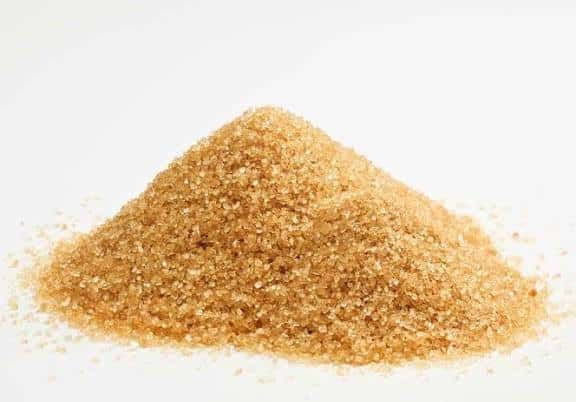
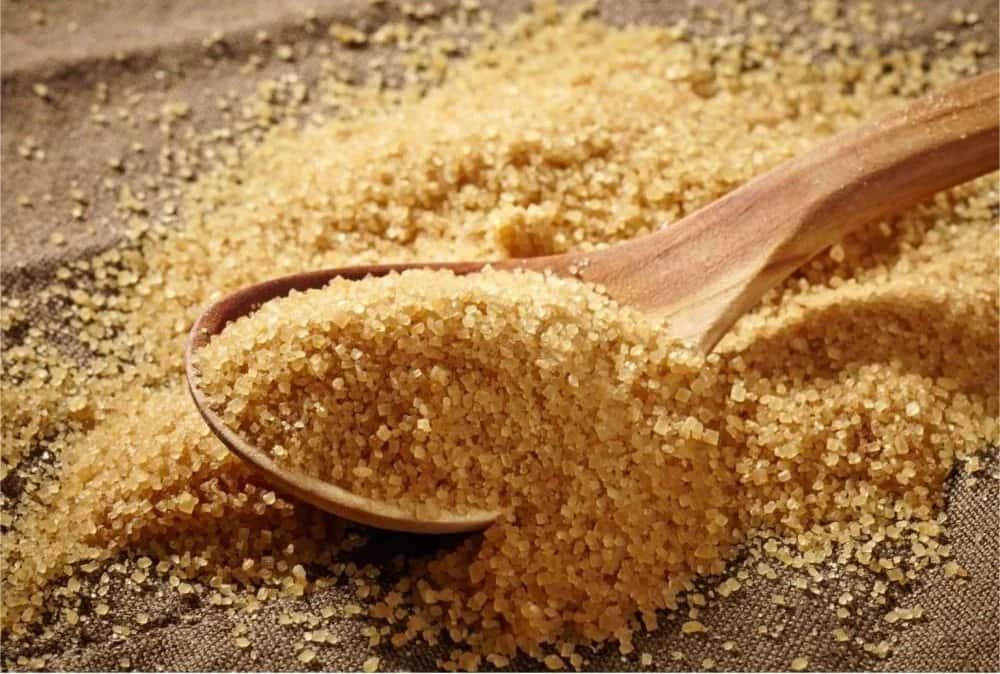
Refiners in Indonesia, South Korea, Japan, Vietnam and China buy raw sugar; USDA names Indonesia and South Korea as the main buyers of Thai raw sugar because both have large refining industries. Thailand's benchmark raw export grade is Thai Hi-Pol (Platts basis: minimum 98.5° polarisation, wet basis). ANUTIDA also offers raw cane sugar and quotes VHP against the buyer's actual pol and colour specification. Polarisation matters for Japan, whose duty-free raw sugar line covers sugar below 98.5° pol.
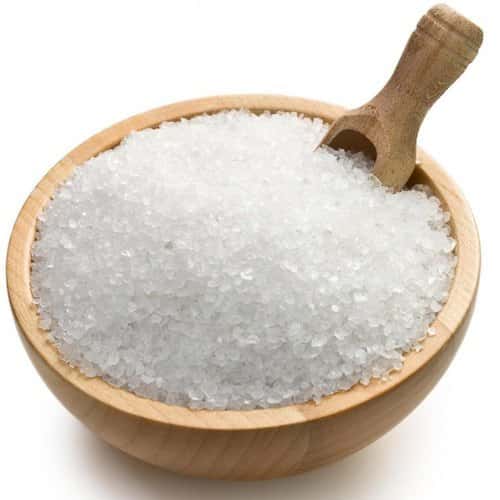
Food and beverage manufacturers usually specify ICUMSA 45 refined sugar, Thailand's refined class of 0–45 IU and at least 99.80 °Z.
Distributors, repackers and food plants in Cambodia, the Philippines and Laos buy Thai white and refined sugar; USDA notes these markets import it mainly for food manufacturing and retail. ICUMSA 150 and ICUMSA 100 fall inside Thai white grade 1 (46–200 IU) and suit repacking and general use where the market allows white sugar.
Logistics: bulk, containers and land borders
Raw sugar for refineries moves in bulk. Czarnikow names Laem Chabang and Si Racha as the main deep-sea locations for Thai sugar shipping, with dedicated sugar terminals, and the Platts Thai Hi-Pol assessment is FOB Bangkok, Laem Chabang, Ko Si Chang or Si Racha. White and refined sugar normally travels in 50 kg bags: the UK P&I Club notes refined sugar is typically carried in containers but may go break-bulk depending on the supply of containers, and a Brazilian loading guide puts up to 540 bags (27 t) in a 20-ft container. See how much sugar fits in a container and logistics.
Neighbouring markets can also be served over land. ANUTIDA is based in Udon Thani, which borders Nong Khai, the Mekong province facing Vientiane; Laos took 358,506 t of Thai white and refined sugar in 2025. Cambodia is different: Thailand closed its land crossings with Cambodia on 23 June 2025 and Cambodia banned cross-border cargo from 29 June 2025. Confirm the current status of the crossings before planning any overland delivery to Cambodia.
Origin documents and tariff preferences
Within ASEAN, Thai-origin sugar can claim ATIGA preferential duty with a Certificate of Origin Form D, issued by Thailand's Department of Foreign Trade under its 2016 notification; for HS chapters 01–24, which include sugar, the application includes an origin examination form. Since December 2019 all ten ASEAN members exchange the electronic Form D through the ASEAN Single Window, and DFT also runs a registration scheme for approved exporters to self-certify ASEAN origin. The preference is material: Indonesia's duty table (dated 2024) shows 5% on ASEAN raw sugar against IDR 550/kg from other origins, and the Philippines charges 5% on ASEAN sugar against 50–65% on non-ASEAN sugar, although Philippine sugar imports are suspended until December 2026.
Preferences are not universal. Japan's tariff schedule lists no Thailand, ASEAN or RCEP rate for its main sugar lines, and Vietnam applies trade-remedy duties to Thai cane sugar regardless of ATIGA. For non-ASEAN destinations the Thai Chamber of Commerce issues non-preferential certificates of origin.
Several markets also screen the supplier. China's GACC registers overseas food facilities (Decree 248, replaced by Decree 280 from 1 June 2026; product coverage is checked in its CIFER system); South Korea requires foreign facilities to be pre-registered with the Ministry of Food and Drug Safety; Japan requires an import notification to MHLW quarantine stations; Vietnam applies risk-based import inspection under Decree 15; and Indonesia requires pre-shipment verification or technical traceability in the country of origin. See sugar export documentation.
Payment and inspection
Asian sugar trade uses the standard instruments: irrevocable letters of credit under the ICC's UCP 600, confirmed by a second bank where issuing-bank or country risk is a concern, and documentary collections. Under Refined Sugar Association rules, white sugar is paid cash against documents unless agreed otherwise: clean on-board bills of lading, certificate of origin, certificate of weight, quality and packing, and commercial invoice. Raw sugar sold on ICE Sugar No. 11 terms settles on shipper's weights and polarisation tests taken at the loading port under an independent supervisor, and the buyer may appoint its own at its own cost.
Market notes
Import rules change. These notes summarise published sources as of 6 October 2026 — confirm current requirements with your customs broker before contracting.
Indonesia
Import volumes are set each December through the commodity balance. The 2026 raw sugar allocation for refineries is 3.12 million t (down 8.2% from 3.4 million t in 2025), plus 508,360 t for export-oriented industries; no 2026 licences were issued for raw sugar destined for plantation white sugar (USDA, April 2026).
MOT Regulation 18/2025: business import licensing plus pre-shipment verification or technical traceability at origin; colour classes raw ≥600 IU, refined ≤75 IU, white 76–300 IU (USDA, Apr 2026).
Raw sugar for refineries and refined sugar for industry are imported only by API-P holders; plantation white sugar only by state-owned enterprises and authorised API-U importers (USDA, Apr 2026).
Duties (USDA table dated 2024): raw sugar 5% from ASEAN vs IDR 550/kg from other origins; white and refined 10% vs IDR 790/kg; VAT 11%.
Thailand supplied 28% of raw and 57% of refined sugar imports in May 2025–February 2026; Thai exports to Indonesia were 1,611,296 t (raw value) in 2025.
Philippines
Sugar imports are suspended: on 21 December 2025 the Department of Agriculture said the import ban would stay until December 2026; as of 29 March 2026 the SRA had issued no new policy allowing refined sugar imports.
Imports run through SRA programmes for licensed traders; Sugar Order No. 8 (July 2025) authorised 424,000 t of refined sugar.
Tariffs: ASEAN-origin sugar 5%; non-ASEAN sugar 50% within the 65,050 t minimum access volume and 65% above it (USDA, Apr 2026).
Refined sugar, including imports, must be fortified with vitamin A under RA 8976 (USDA FAIRS, Apr 2026).
Thai white/refined exports rose to 400,429 t in 2025 from 203,138 t in 2024.
Vietnam
Anti-dumping and countervailing duties on Thai cane sugar (raw and refined) total 47.64% (42.99% AD + 4.65% CVD) as set in June 2021; after the 2023 review, nine named Thai producers exporting through specified traders pay 32.75% or 30.38%.
On 2 June 2026 MOIT extended the measures to 15 June 2031 (Decision 1309/QĐ-BCT).
Anti-circumvention duties at the same 47.64% cover sugar from Cambodia, Indonesia, Laos, Malaysia and Myanmar made with Thai inputs, also extended on 2 June 2026 for the same period (Decision 1310/QĐ-BCT).
ASEAN sugar has had no tariff-rate quota since 1 January 2020 (5% ATIGA rate, per the national sugar association); non-ASEAN sugar enters under an auctioned WTO quota (133,000 t in 2025).
Thai exports in 2025: 131,301 t raw and 107,068 t white/refined (raw value).
China
Tariff-rate quota of 1.945 million t at 15% in quota (about 70% allocated to state-owned enterprises); 50% out of quota, with automatic import licences for out-of-quota sugar that the government rations (USDA, April 2026).
Import permits for sugar syrup and premix (HS 1702.90) from 74 Thai manufacturers have been suspended since 10 December 2024 after hygiene findings, and remained suspended in April 2026. USDA Bangkok reports the suspension was widened in October 2025 to six more Thai sugar product categories.
Overseas food facilities register with GACC under Decree 248, superseded by Decree 280 from 1 June 2026; check product coverage in CIFER.
Thai exports to China in 2025: 234,634 t (209,207 t white/refined, 25,427 t raw).
South Korea
Refined sugar (HS 1701.91/1701.99): basic tariff 30%; the 5% quota tariff continues in 2026 with the quota raised from 100,000 t to 120,000 t (Ministry of Economy and Finance, 2 December 2025).
Foreign food facilities must be pre-registered with the Ministry of Food and Drug Safety before import declaration; registration is valid for two years (USDA FAIRS, May 2026).
A manufacture date is mandatory on sugar labels (USDA FAIRS, May 2026).
Thai exports in 2025: 593,221 t, of which 503,743 t raw sugar for Korean refiners and 89,478 t white/refined.
Japan
Tariff schedule as of 8 August 2026: raw cane sugar below 98.5° polarisation (1701.14-110) general rate Free; other cane sugar (1701.14-200) and refined sugar (1701.99-200) 21.50 yen/kg. No Thailand, ASEAN or RCEP rate is listed for these lines.
ALIC collects price-adjustment levies on imported sugar under the sugar and starch price adjustment system (ALIC, page dated June 2023).
2025 customs data: Thailand supplied 88,790 t of the 88,850 t imported under 1701.14-110, plus 19,076 t under 1701.14-200.
Importers file a food import notification with MHLW quarantine stations at the port of entry (USDA FAIRS, Jan 2026).
Malaysia
Thai exports in 2025: 224,083 t (raw value), of which 208,275 t white/refined and 15,808 t raw.
Malaysia also exports refined sugar: it supplied 23% of Indonesia's refined imports in May 2025–February 2026 and competes with Thailand in Korea.
Malaysian sugar made with Thai inputs falls under Vietnam's anti-circumvention duties, extended in June 2026 to 15 June 2031.
Cambodia
Thailand's second-largest destination in 2025: 821,460 t (raw value), almost all white/refined (820,148 t).
Thailand closed 18 land crossings with Cambodia on 23 June 2025, and Cambodia banned cargo through all Cambodian–Thai checkpoints from 29 June 2025; Thailand reported a 97% drop in border trade in July 2025.
USDA (March 2026) reports Cambodian importers rerouted trade through Vietnam after the closure. The current status of the crossings must be confirmed before planning overland delivery.
Cambodian sugar made with Thai inputs falls under Vietnam's anti-circumvention duties, extended in June 2026 to 15 June 2031.
Laos
Thai white/refined exports to Laos: 358,506 t in 2025, up from 334,874 t in 2024 and 78,284 t in 2023 (raw value).
Udon Thani, ANUTIDA's base, borders Nong Khai, the Mekong province facing Vientiane (provincial plan, 2019).
Lao sugar made with Thai inputs falls under Vietnam's anti-circumvention duties, extended in June 2026 to 15 June 2031.
Myanmar
Thai white/refined exports: 94,412 t in 2025, up from 60,166 t in 2024 (raw value).
All imports need a licence through Myanmar Tradenet 2.0; from 1 January 2026 applications are valid for 180 days, one per product type per month.
On 1 May 2026 Myanmar raised import duties on various food and consumer goods, nearly doubling applied rates; confirm the current sugar rate before contracting.
Myanmar sugar made with Thai inputs falls under Vietnam's anti-circumvention duties, extended in June 2026 to 15 June 2031.
Frequently asked questions
Can Thai sugar enter ASEAN markets at preferential duty?
Yes, where the importing country applies ATIGA preferences and the shipment carries a valid Certificate of Origin Form D, paper or electronic through the ASEAN Single Window. Indonesia's duty table (dated 2024), for example, shows 5% on ASEAN raw sugar against IDR 550/kg from other origins. Vietnam is the exception for Thai cane sugar because of its trade-remedy duties.
Does Vietnam still apply duties to Thai sugar?
Yes. Vietnam's anti-dumping and countervailing duties on Thai cane sugar, 47.64% in total as last set, with lower rates for named producers after the 2023 review, were extended in June 2026 until 15 June 2031. Sugar from Cambodia, Indonesia, Laos, Malaysia and Myanmar made with Thai inputs is covered too.
Which grade should an Indonesian buyer order?
The one that matches the import licence. Indonesian rules class raw sugar at 600 IU or more (refineries), refined sugar at 75 IU or less (industrial users with API-P) and white sugar at 76–300 IU (state-owned enterprises and authorised importers). Confirm the class before contracting.
Can sugar be delivered overland to Laos or Cambodia?
Udon Thani, ANUTIDA's base, borders Nong Khai, the Mekong province facing Vientiane, so ask for delivery terms that suit your route to Laos. The Thai–Cambodian land crossings were closed to cargo from June 2025; confirm their current status with your broker before planning overland delivery.
Thailand's benchmark raw export grade: raw cane sugar with a minimum pol of 98.5° (wet basis) under the Platts Thai Hi-Pol assessment, loaded in bulk at Thai ports or bagged for smaller buyers.
Thai raw cane sugar — pol of at least 97.00 °Z and colour from 601 IU under Thai rules — priced off the ICE No. 11 96° basis and shipped mainly in bulk to destination refineries.
Raw cane sugar traded under the VHP (very high polarisation) label, benchmarked by Platts at 99.00–99.49° pol for Brazil. Thai mills selling VHP publish their own specs, and ANUTIDA quotes against the offer's actual pol and colour.
Thai refined cane sugar in the 0–45 IU colour class with pol of at least 99.80 °Z — the quality behind the world white-sugar benchmark — supplied in 50 kg, 25 kg and 1-tonne bags for export.
Thai mill white cane sugar held to the Codex plantation-white colour ceiling of 150 IU (pol ≥ 99.5 °Z), inside Thai white sugar grade 1 — bagged for importers, repackers and food manufacturers.
Thai white cane sugar contracted at 100 IU or less — a buyer and producer tier inside Thai white grade 1 for users who want whiter sugar than standard mill white without moving to refined.