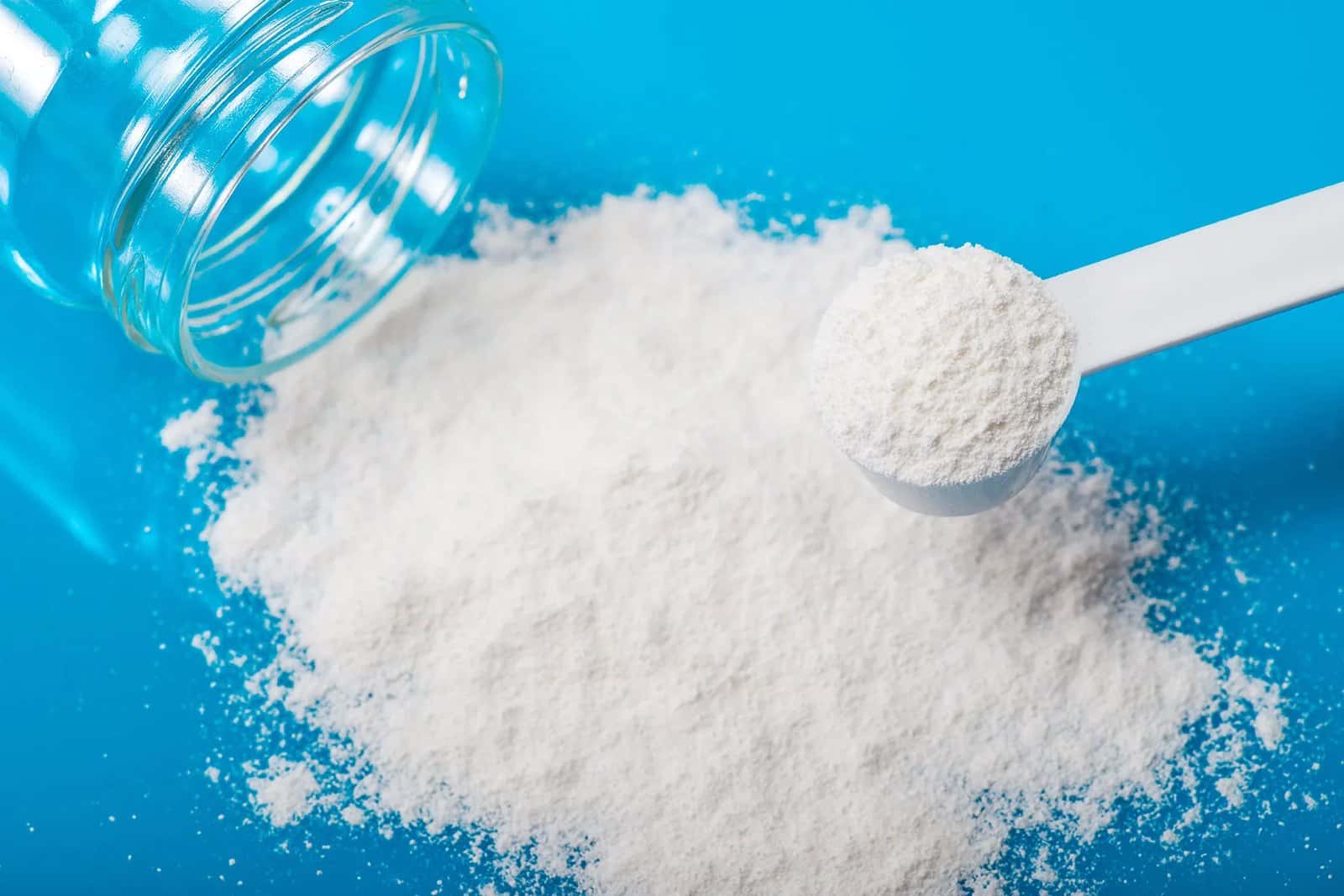
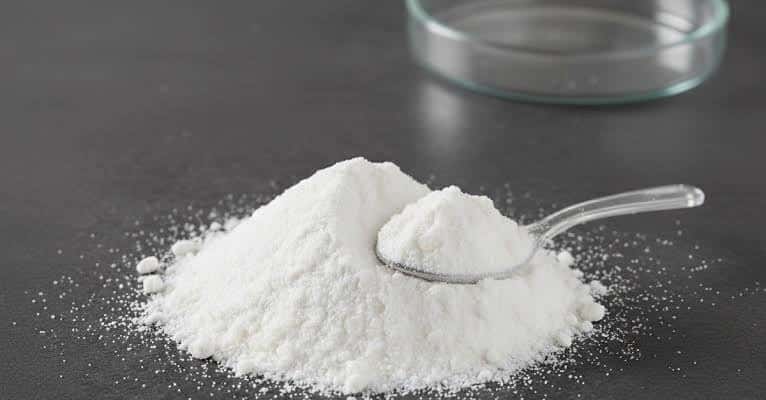
Dextrose is traded in two crystalline forms, and specifications and purchase orders sometimes just say "dextrose". Codex, the EU and the US define the monohydrate and anhydrous forms separately, so they are distinct products, even though the glucose itself is the same. This guide explains what separates them and how to decide which one to order.
What is the same
Both forms are purified, crystallised D-glucose made by completely hydrolysing starch, refining the hydrolysate and crystallising it. Codex CXS 212-1999 and EU Directive 2001/111/EC set the same purity requirement for both: at least 99.5% D-glucose on a dry basis, with sulphated ash of no more than 0.25% on a dry basis. The US rule (21 CFR 168.111) expresses the purity requirement as a reducing-sugar content (DE) of at least 99.5% on a dry basis, and 21 CFR 168.110 applies the same for the anhydrous form.
What is different
| Parameter | Dextrose monohydrate | Dextrose anhydrous |
|---|---|---|
| Water of crystallisation | One molecule per molecule of D-glucose | None |
| Formula | C₆H₁₂O₆·H₂O | C₆H₁₂O₆ |
| D-glucose, dry basis (Codex / EU) | ≥ 99.5% | ≥ 99.5% |
| Total solids (Codex / EU / US) | ≥ 90.0% | ≥ 98.0% |
| Implied maximum water at the limit | Up to 10% | Up to 2% |
| Sulphated ash, dry basis | ≤ 0.25% | ≤ 0.25% |
| Sulphur dioxide | ≤ 15 mg/kg (Codex); ≤ 20 mg/kg (US) | ≤ 15 mg/kg (Codex); ≤ 20 mg/kg (US) |
| US standard of identity | 21 CFR 168.111 | 21 CFR 168.110 |
| US label names | "Dextrose monohydrate", "dextrose", "corn sugar" | "Dextrose anhydrous", "anhydrous dextrose", "corn sugar anhydrous" |
| EU ingredient name | "Dextrose" | "Dextrose" |
What the crystal water means in practice
One molecule of water bound to each glucose molecule is about 9% of the monohydrate's weight (18 of 198 g/mol). Two practical consequences follow:
- Dosage: to deliver the same amount of glucose solids, a recipe needs about 1.1 kg of monohydrate for every 1 kg of anhydrous dextrose. Formulas should be converted on a dry-solids basis when switching forms.
- Water budget: the monohydrate brings water into the product. In low-moisture systems such as dry blends, tablets and some confectionery and pharmaceutical processes, that water can matter, which is why the anhydrous form exists.
Neither form is "purer" in glucose terms. The 99.5% minimum is on a dry basis for both, so the comparison should always be made on the same basis. A monohydrate lot reporting about 91% total solids and an anhydrous lot reporting about 99% may contain glucose of identical purity.
How to choose
- Use the form your formulation was developed and validated on. Switching forms changes solids and moisture, so a recipe change needs a dry-basis recalculation and a trial.
- Choose anhydrous where added water is a problem, such as low-moisture powders, some compressed products and processes with tight moisture limits.
- Choose monohydrate for general food and beverage uses, such as bakery, beverage mixes and confectionery, where the crystal water is not a constraint.
- For pharmaceutical use, specify the pharmacopoeia and monograph. Pharmacopoeia grades of either form are separate products from food-grade dextrose.
Writing the specification
- Name the form explicitly ("dextrose monohydrate" or "dextrose anhydrous"), never just "dextrose".
- State the D-glucose or reducing-sugar basis (dry basis) and the total-solids or loss-on-drying limit.
- Give the sulphur dioxide limit for your market (Codex 15 mg/kg; US 20 mg/kg) and any microbiological limits.
- Add granulation or particle-size requirements, because these vary between producers and grades.
- Specify bag size (25 kg or 50 kg), pallet pattern and container load.
Powdered (icing) dextrose
Codex also defines powdered dextrose, or icing dextrose: finely pulverised dextrose anhydrous, dextrose monohydrate or a mixture of the two. It may contain up to 1.5% of a permitted anticaking agent, or up to 5% starch if no anticaking agent is used, and any starch and its maximum amount must be declared. The name must state which form, or both, the powder was made from. If you buy powdered dextrose, specify the base form, the particle size and whether anticaking agent or starch is acceptable, because those choices change both the label and the moisture behaviour.
Storage
Both forms should be kept sealed in a dry warehouse, on pallets and off the floor, because moisture pick-up leads to caking. Because the anhydrous form's specification has a much lower water limit, check total solids on the COA against the order specification on arrival.
Supply through ANUTIDA
ANUTIDA quotes both forms against the producer's specification and states feedstock and origin in the quotation. Each lot ships with a Certificate of Analysis showing D-glucose content, solids and the other agreed parameters. If you are deciding between dextrose and a syrup, see glucose syrup vs dextrose.
Frequently asked questions
Is anhydrous dextrose purer than monohydrate?
Not in glucose terms. Both must contain at least 99.5% D-glucose on a dry basis. Anhydrous dextrose simply contains no water of crystallisation, so its total solids are higher (≥ 98% vs ≥ 90%).
How do I convert a recipe from anhydrous to monohydrate?
Work on a dry-solids basis. Because the monohydrate carries about 9% bound water, about 1.1 kg of monohydrate supplies the glucose of 1 kg of anhydrous dextrose. Confirm with the actual total solids on the COA and a production trial.
Can both be labelled simply as "dextrose"?
In the EU, yes: Regulation 1169/2011 allows either form to be declared as "dextrose". In the US, "dextrose" is a permitted name for the monohydrate, while the anhydrous form is named "dextrose anhydrous" or "anhydrous dextrose".
Sources & references
- Standards bodyStandard for Sugars (CXS 212-1999, amended 2001) — Codex Alimentarius Commission (FAO/WHO)
- RegulatorCouncil Directive 2001/111/EC relating to certain sugars intended for human consumption (consolidated 18.11.2013) — EUR-Lex, European Union
- RegulatorRegulation (EU) No 1169/2011 on the provision of food information to consumers (consolidated 01.04.2025) — EUR-Lex, European Union
- Government21 CFR 168.110 Dextrose anhydrous — US Government Publishing Office / eCFR
- Government21 CFR 168.111 Dextrose monohydrate — US Government Publishing Office / eCFR
- Government21 CFR 184.1857 Corn sugar — US Government Publishing Office / eCFR
- Governmentalpha-D-Glucose monohydrate (PubChem CID 66370) — US National Library of Medicine, PubChem