Thai sugar reaches the Americas as raw cane sugar for U.S. refiners under Thailand's tariff-rate quota allocation, and as sugar for Canadian buyers. In both markets, quota status, duty lines and food-safety registrations shape each contract. ANUTIDA supplies and exports Thai sugar to buyers in the Americas and arranges the export permits, customs clearance and shipping documents each shipment requires.
Thai-reported UN Comtrade data for 2025 show HS 1701 exports of 14,297 t to the United States and 6,738 t to Canada. OCSB data reproduced by the USDA show 14,257 t (raw value) of Thai raw sugar to the United States in 2025. Mexico and Chile also took Thai sugar in 2023.
Thai HS 1701 sugar exports to the Americas (tonnes, Thai-reported)
Market
2023
2024
2025
United States
22,447
18,598
14,297
Canada
5,671
7,855
6,738
Mexico
4,990
—
—
Chile
2,060
—
—
Thai HS 1701 sugar exports to the Americas (tonnes, Thai-reported). Source: UN Comtrade public data, Thailand-reported exports of HS 1701 (net weight, rounded); the U.S. 2024 weight is flagged as estimated. “—” = no quantity shown for that year.
United States: raw sugar under the tariff-rate quota
U.S. sugar imports are managed through tariff-rate quotas. For fiscal year 2027 (1 October 2026 – 30 September 2027) USDA set the WTO raw cane sugar TRQ at 1,117,195 metric tons raw value (MTRV), the U.S. WTO minimum, and USTR allocated it by country: Thailand received 15,061 MTRV in the July 2026 notice and a further 949 MTRV in September 2026, 16,010 MTRV in total by our sum of the two notices. In-quota sugar may enter from 1 October 2026, and sugar shipped under a country allocation must be accompanied by a certificate of quota eligibility.
Duty depends on the line. In-quota raw cane sugar (HTS 1701.14.10) pays 1.4606 US cents/kg less 0.020668 cents for each degree below 100° polarity, with a floor of 0.943854 cents/kg; outside the quota (1701.14.50) it pays 33.87 cents/kg and may face additional safeguard duties under heading 9904.17. For HTS purposes raw sugar is sugar polarizing below 99.5°, so Hi-Pol and VHP-type raw sugars specified below that level fall within it.
Refined sugar enters under a separate TRQ: for FY2027 it is 22,000 MTRV, of which 10,300 goes to Canada, 2,954 to Mexico and 7,090 is first-come, first-served, plus 1,656 MTRV of specialty sugar; over-quota refined sugar pays 35.74 cents/kg. In addition, heading 9903.05.77, as listed in HTS Revision 20 (2026), adds 12.5% ad valorem to products of Thailand; U.S. note 52(b) exempts the in-quota sugar lines 1701.14.10 and 1701.99.10, but not the over-quota lines.
Canada
Thailand shipped 6,738 t of HS 1701 sugar to Canada in 2025. Canada's 2026 Customs Tariff lists raw cane sugar (1701.14.00) as MFN Free and refined or other sugar (1701.99.90) at $30.86 per tonne. Importers need a Safe Food for Canadians licence through My CFIA, a Preventive Control Plan and traceability records. The SFCR exempt certain unprocessed foods listed in Schedule 1 that will be manufactured into products such as sugar, if labelled “For Further Preparation Only”; importers should confirm whether their product qualifies.
Products for buyers in the Americas
For U.S. refiners with quota-eligible demand: Thai Hi-Pol raw sugar (Platts basis: minimum 98.5° pol), raw cane sugar and VHP raw sugar, each quoted against the buyer's actual pol and colour specification. Because the in-quota duty is graduated by polarity, the contract polarisation and the load-port test result matter commercially. Canadian food manufacturers and distributors can request ICUMSA 45 refined sugar or ICUMSA 150 white sugar, on which the MFN duty is $30.86 per tonne.
Inspection, documents and payment
Platts assesses Thai Hi-Pol FOB Bangkok, Laem Chabang, Ko Si Chang or Si Racha. Thailand is a deliverable origin under ICE Sugar No. 11, the benchmark raw sugar contract, whose rules settle on shipper's weights and polarisation tests taken at the loading port under an independent supervisor chosen by the seller; samples are drawn for each 2,000 t, and if the parties' polarisation results differ by 0.15° or more an independent chemist tests a third sample. The seller's payment documents under those rules are clean on-board bills of lading, a commercial invoice based on actual polarisation, weight and test certificates and a certificate of origin. Containerised sugar for Canada also needs a verified gross mass declared before loading under SOLAS.
Payment follows standard sugar practice: an irrevocable letter of credit under UCP 600, confirmed where issuing-bank risk is a concern, or documents against payment. See FOB vs CFR vs CIF for sugar and what is high-pol sugar.
Market notes
Import rules change. These notes summarise published sources as of 6 October 2026 — confirm current requirements with your customs broker before contracting.
United States
FY2027 raw cane sugar TRQ: 1,117,195 MTRV. Thailand's allocation: 15,061 MTRV (24 July 2026) plus 949 MTRV (23 September 2026), 16,010 MTRV combined by our sum; the FY2026 allocation was 15,061 MTRV.
In-quota raw (1701.14.10): 1.4606 ¢/kg less 0.020668 ¢ per degree below 100° (minimum 0.943854 ¢/kg); over-quota raw (1701.14.50): 33.87 ¢/kg plus possible safeguard duties (9904.17) (HTS Rev. 20, 2026).
FY2027 refined TRQ 22,000 MTRV: 10,300 to Canada, 2,954 to Mexico and 7,090 first-come, first-served (USTR, July 2026); over-quota refined (1701.99.50) 35.74 ¢/kg (HTS Rev. 20, 2026).
HTS 9903.05.77 adds 12.5% ad valorem on products of Thailand (as listed in HTS Rev. 20, 2026); note 52(b) exempts in-quota lines 1701.14.10 and 1701.99.10, not over-quota lines. Confirm the current Chapter 99 status before contracting.
FDA food facility registration with a U.S. agent (renewal window 1 October–31 December 2026) and Prior Notice at least 8 hours before arrival by water.
Canada
Thai HS 1701 exports: 5,671 t (2023), 7,855 t (2024) and 6,738 t (2025).
Importers need an SFCR licence (My CFIA), a Preventive Control Plan and traceability; non-resident importers qualify only from countries with a food safety system Canada recognises as equivalent (USDA FAIRS, Jul 2026).
Certain Schedule 1 unprocessed foods destined for manufacture into products such as sugar are exempt if labelled “For Further Preparation Only”; confirm whether this applies (USDA FAIRS, Jul 2026).
Mexico and Latin America
Thai-reported HS 1701 exports in 2023 included 4,990 t to Mexico and 2,060 t to Chile.
Frequently asked questions
Can Thai sugar be exported to the United States?
Yes, mainly as raw cane sugar within Thailand's tariff-rate quota allocation: 15,061 MTRV plus 949 MTRV for FY2027. Shipments need a certificate of quota eligibility, an FDA-registered facility and FDA Prior Notice.
Does the 12.5% additional duty on Thai goods apply to sugar?
HTS heading 9903.05.77 adds 12.5% to products of Thailand, but U.S. note 52(b) exempts the in-quota sugar lines 1701.14.10 and 1701.99.10. Over-quota sugar is not exempted. Confirm the current HTS status with your customs broker.
What duty does Canada charge on Thai sugar?
Under Canada's 2026 Customs Tariff, raw cane sugar is MFN Free and refined sugar pays $30.86 per tonne. Importers also need a Safe Food for Canadians licence.
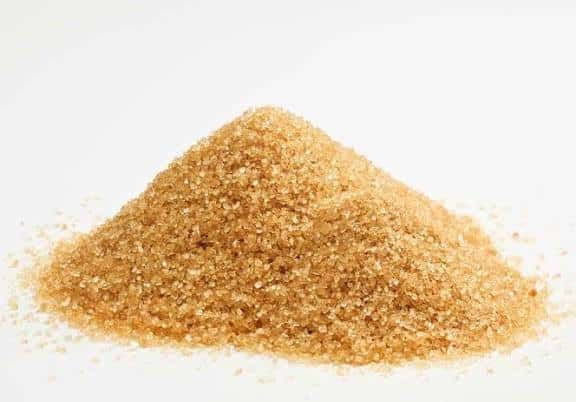
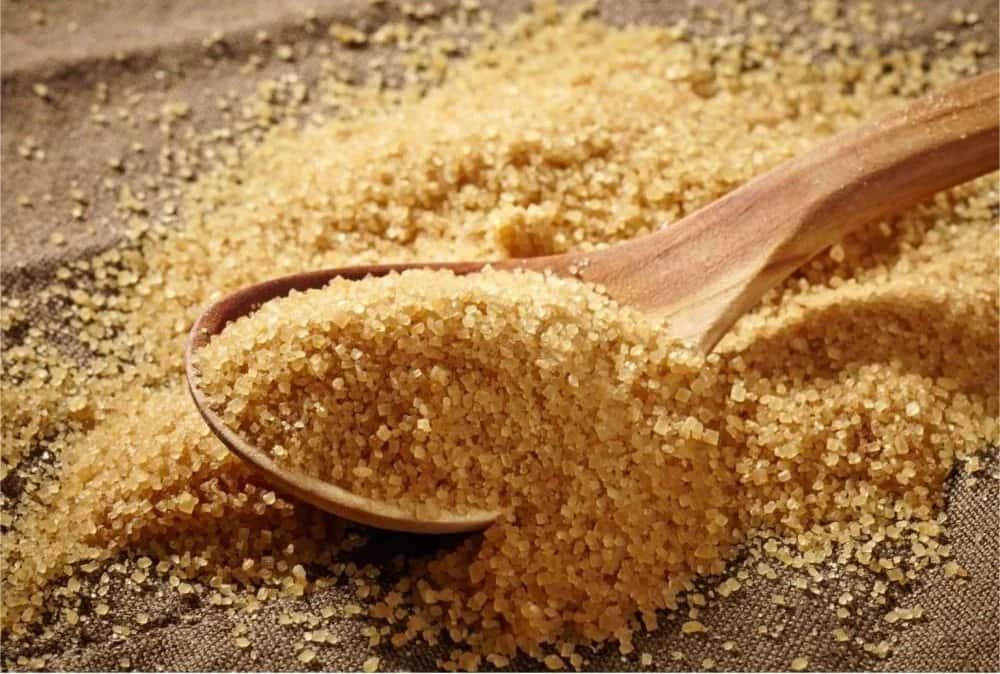
Thailand's benchmark raw export grade: raw cane sugar with a minimum pol of 98.5° (wet basis) under the Platts Thai Hi-Pol assessment, loaded in bulk at Thai ports or bagged for smaller buyers.
Thai raw cane sugar — pol of at least 97.00 °Z and colour from 601 IU under Thai rules — priced off the ICE No. 11 96° basis and shipped mainly in bulk to destination refineries.
Raw cane sugar traded under the VHP (very high polarisation) label, benchmarked by Platts at 99.00–99.49° pol for Brazil. Thai mills selling VHP publish their own specs, and ANUTIDA quotes against the offer's actual pol and colour.
Thai refined cane sugar in the 0–45 IU colour class with pol of at least 99.80 °Z — the quality behind the world white-sugar benchmark — supplied in 50 kg, 25 kg and 1-tonne bags for export.
Thai mill white cane sugar held to the Codex plantation-white colour ceiling of 150 IU (pol ≥ 99.5 °Z), inside Thai white sugar grade 1 — bagged for importers, repackers and food manufacturers.