Thai sugar
Raw Sugar Supplier from Thailand
- Thai origin
- Commercial supply
- Published specifications
- Export from Thailand
On this pageRaw Sugar
Products
Raw Sugar products
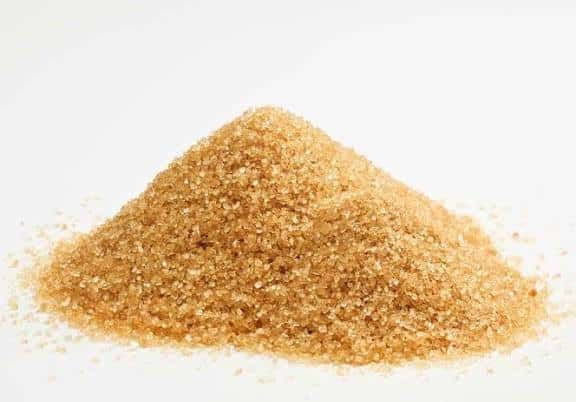
Thai raw cane sugar — pol ≥97.00 °Z and colour ≥601 IU under Thai rules — supplied by ANUTIDA to refiners and industrial buyers in bulk or bags.
Buyer's guide
What raw sugar is
Codex defines raw cane sugar as partially purified sucrose crystallised from partially purified cane juice, with the crystals covered by a film of cane molasses. In the mill, cane is crushed, the juice clarified and evaporated to syrup, and the syrup boiled until sucrose crystallises; centrifuges separate the crystals without the further purification that white sugar receives. The molasses film gives raw sugar its brown colour and carries the impurities a refinery later removes.
Under Thai rules, raw sugar (น้ำตาลทรายดิบ) is sugar of at least 97.00 °Z polarisation and 601 ICUMSA units or more of colour. The boundary stood at 1,000 IU until 2021, when Thailand lowered it to 600 IU to keep Thai raws competitive in Indonesia, which had cut its import colour limit for raw sugar from 1,200 to 600 IU. Indonesia's current trade regulation still classes raw sugar as 600 IU or higher.
How raw sugar is priced and graded
The world benchmark is ICE Futures U.S. Sugar No. 11: raw centrifugal cane sugar on a 96° average polarisation basis, delivered FOB the receiver's vessel in the country of origin. Thailand is a deliverable origin. Higher pol earns a premium — 1.00% of the contract price at 97°, a further 1.25% for 97–98°, 1.50% for 98–99° and 0.15% for each full 0.1° from 99.0° to 99.3°. From the March 2028 delivery month the 96–95° deduction line drops out of the schedule. The contract has no colour, moisture or ICUMSA term; those come from the physical contract.
| Grade | Polarisation | Defined by | Basis |
|---|---|---|---|
| Raw sugar (Thai class) | ≥ 97.00 °Z; colour ≥ 601 IU | Cane and Sugar Board notification | Regulatory class |
| ICE No. 11 raw | 96° average, premiums to 99.3° | ICE Futures U.S. | Exchange contract |
| Thai Hi-Pol | ≥ 98.5° (wet basis) | S&P Global Platts | Price-assessment specification |
| VHP, Brazil Centre-South | 99.00–99.49° | S&P Global Platts | Price-assessment specification |
| J-Spec / K-Spec | Customer-specific, e.g. K-Spec pol ≤ 99.49 (dry basis), colour ≤ 3,000 IU | Thai producers for Japanese and Korean buyers | Producer specification |
Thai production and destinations
Raw sugar dominates Thai output. OCSB's 2025/26 closing report records 9,176,027 tonnes of raw sugar — 8,966,287 tonnes of it in bulk — out of about 12.0 million tonnes produced. According to Czarnikow, about half of Thai raw sugar comes from the Northeast and is trucked to the deep-sea sugar terminals at Laem Chabang and Sri Racha.
In calendar 2025 Thailand exported 2,498,699 tonnes (raw value) of raw sugar (OCSB data via USDA). Indonesia took 1,560,086 t and South Korea 503,743 t — both have large domestic refining industries — followed by Vietnam (131,301 t) and Japan (106,500 t). Japanese customs data show Thailand supplying 88,790 t of the 88,850 t of raw cane sugar below 98.5° pol that Japan imported in 2025.
Buying raw sugar
- Pol and colour. State the minimum polarisation, whether it is measured wet or dry, and any colour range your refinery or import licence requires.
- Settlement. Under Sugar No. 11 rules the invoiced pol is the mean of the deliverer's and receiver's results when they agree within 0.15°; otherwise an umpire test decides. Agree the testing and settlement rule in your contract.
- Cargo size. The Platts Thai Hi-Pol benchmark assumes 12,000-tonne parcels (8,000–12,000 t considered) loading about 3,000 tonnes per weather working day; bagged lots suit smaller buyers. See how sugar is shipped.
- Storage. Raw sugar holds about 0.25–1.1% water and deliquesces once relative humidity reaches about 80%; marine cargo guidance says raw sugar loaded above 48 °C should be rejected because it may cake as it cools.
- Export formalities. Thai sugar exports require Cane and Sugar Board permission; ANUTIDA arranges the export permits, customs clearance and shipping documents each shipment requires.
Packaging
Most Thai raw sugar is loaded in bulk onto vessels, and some mills also sell bagged raw sugar that can travel in containers. Tell ANUTIDA whether you need a bulk parcel or bagged lots, with your volume and discharge port, and the offer states the packaging and Incoterm — see FOB vs CFR vs CIF.
Who buys raw sugar
Raw sugar is an industrial input that must be refined before it is eaten. Thai producers list white-sugar refineries, distilleries and vinegar makers among its users, and Thai raws feed refiners in importing countries that supply refined sugar to food and beverage manufacturers. See our industrial buyers page.
How ordering works
A clear process from enquiry to export.
- 01Define your requirementGrade, quantity, packaging and destination port.
- 02Confirm specificationWe confirm the specification, packing and documents for your market.
- 03Request your quoteA written quotation with specification, origin and delivery terms.
- 04Export coordinationANUTIDA arranges packing, export clearance, loading and shipping documents.
Shipments travel with the document set agreed in your contract — typically a commercial invoice, packing list, bill of lading, certificate of origin and a Certificate of Analysis for the lot. Minimum order and lead time are confirmed with each quotation. See export and logistics.
Thai manufacturers producing raw sugar
ANUTIDA supplies raw sugar made across the Thai sugar industry. Name a preferred mill or brand in your request and the manufacturer is confirmed with each offer.
- Mitr PholSugar products · 8 millsView profile
- Thai Roong RuangSugar products · 10 millsView profile
- KI Sugar GroupSugar products · 2 millsView profile
- KSLSugar products · 5 millsView profile
- KTISSugar products · 3 millsView profile
- Khonburi SugarSugar products · 2 millsView profile
- CristallaSugar products · 3 millsView profile
- WangkanaiSugar products · 4 millsView profile
- Eastern Sugar & CaneSugar products · 2 millsView profile
- TSM GroupSugar products · 2 millsView profile
- Buriram SugarSugar products · 1 millView profile
- Kaset PholSugar products · 1 millView profile
- Mitr KasetSugar products · 2 millsView profile
- Nakornphet SugarSugar products · 1 millView profile
- Rajburi SugarSugar products · 2 millsView profile
Raw Sugar — buyer questions
Quick answers to common questions from international buyers.
What polarisation does Thai raw sugar have?
Thai rules set a minimum of 97.00 °Z. Commercial export grades go higher: the Platts Thai Hi-Pol benchmark is at least 98.5° on a wet basis, and VHP offers quote 99° or more. The contract states the pol that applies.
Can raw sugar be eaten directly?
No. Raw sugar is made for refining, and Thai producers state that it must be refined before consumption. For a minimally processed sugar for direct use, see brown sugar.
Is raw sugar shipped in bags or in bulk?
Mostly in bulk vessels, but some Thai mills bag raw sugar, and bagged lots can be shipped in containers. State the format you need in your request.
Related sugar categories
Knowledge Center
Guides for raw sugar buyers
 SugarRaw Sugar vs Refined Sugar: Production, Uses, Buyers and BenchmarksRaw sugar is a refinery feedstock; refined sugar is ready for food use. How each is made, who buys raw sugar, how both are priced on ICE, and what Thai export data shows.Read guide
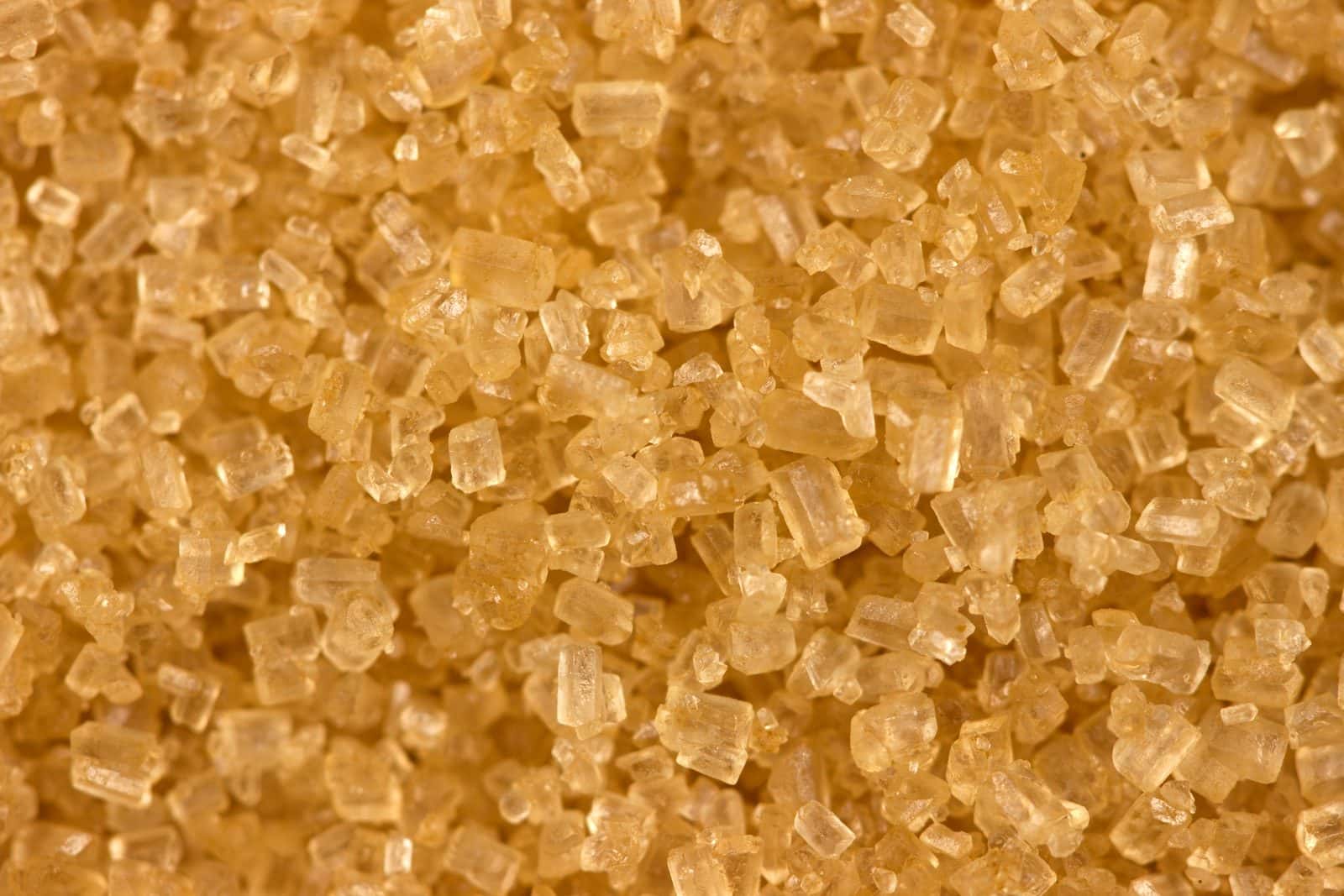 SugarWhat Is High-Pol Sugar? Thai Hi-Pol Raw Sugar, Pol Premiums and SpecsThai Hi-Pol is Thailand’s benchmark raw export grade: min. 98.5° pol, wet basis (Platts). How pol premiums work, what J-Spec and K-Spec mean, and why the colour boundary moved in 2021.Read guide
 SugarWhat Is VHP Sugar? Very High Polarisation Raw Sugar ExplainedVHP is very high polarisation raw sugar, benchmarked by Platts at 99.00–99.49° pol. How VHP, VVHP and Thai Hi-Pol compare, how Thai mills use the label and how to specify it.Read guide
 LogisticsHow Sugar Is Shipped Internationally: Bulk, Containers and Break-BulkRaw sugar sails in bulk, refined sugar mostly in containers. How each mode works from Thailand's Gulf ports and Ko Sichang, and how sugar is protected from moisture at sea.Read guide
Need raw sugar for your market?
Tell us your product, specification, quantity and destination.
ANUTIDA reviews your requirement and replies with packaging options and a written quotation.