VHP in brief
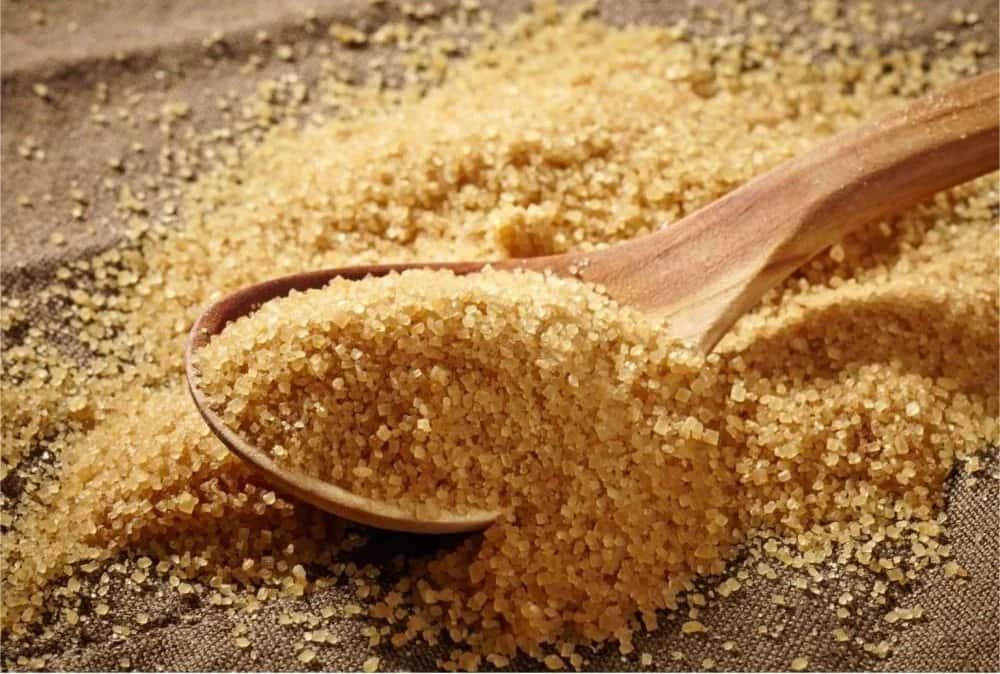
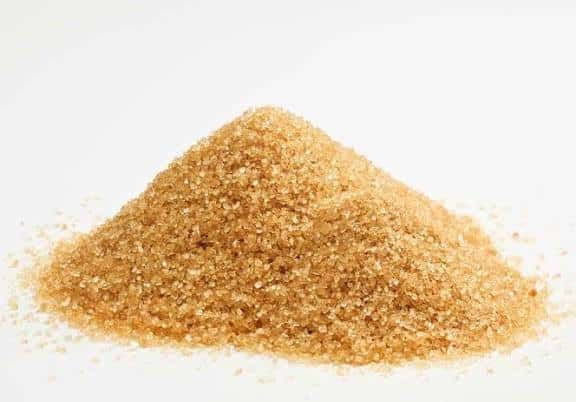
VHP stands for Very High Polarisation. It is a grade of raw cane sugar — still coated with a thin film of molasses and traded mainly as refinery feedstock — that has been crystallised and washed to a higher sucrose purity than conventional raw sugar. It is a trade term, not a standard grade: Codex, ICUMSA and Thai regulation do not define it.
UNICA, the Brazilian sugarcane industry association, calls VHP Brazil’s main exported sugar type and describes it as a raw material for other sugars and industrial processes. The price benchmark is S&P Global Platts’ Brazil Centre-South VHP assessment: raw cane sugar with a minimum of 99.00° and a maximum of 99.49° polarisation, FOB Santos, on a typical parcel of 50,000 tonnes loading 10,000 tonnes per weather working day.
VHP, VVHP and Thai Hi-Pol compared
| Designation | Polarisation | Colour | Basis | Published by |
|---|---|---|---|---|
| Brazil Centre-South VHP | 99.00–99.49° | Not part of the definition | Price-assessment specification | S&P Global Platts |
| VVHP (very very high pol) | Typically about 99.6 % | — | Typical value | UNICA |
| Copersucar export VVHP | ≥ 99.6 °Z | ≤ 450 IU | Producer specification (published 2007) | Oliveira et al., 2007 |
| Thai Hi-Pol | ≥ 98.5° (wet basis, at shipment) | Not part of the definition | Price-assessment specification | S&P Global Platts |
| Thai raw sugar class | ≥ 97.00 °Z | ≥ 601 IU | Regulatory class | Cane and Sugar Board (OCSB manual) |
| ICE Sugar No. 11 | 96° average basis; allowances to 99.3° | No colour term | Exchange contract basis | ICE Futures U.S. |
Why buyers pay for higher pol
Refiners buy sucrose, and pol approximates sucrose content. Under ICE Sugar No. 11, raw sugar delivered above the 96° basis earns allowances that add up, degree by degree, to 4.20 % of the notice price at 99.3° (the sum of the published allowances). Platts’ Indonesia import-parity calculation likewise adds a 4.2 % pol premium for Brazil VHP, against 3.75 % for Thai Hi-Pol.
Higher purity also changes the refinery. In the refinery analysis cited by Kochergin (ISSCT, 2010), switching from conventional raw sugar at 98.4 pol and 3,800 IU to VHP at 99.4 pol and 800 IU eliminated affination — the washing and centrifuging step that removes the syrup film from raw crystals — and reduced low-grade massecuite handling, saving energy and utilities.
The same paper found that even VHP sugar can double its colour during long-term storage. For buyers that means colour should be specified at loading and checked again on arrival, and storage time before shipment is worth asking about. See the sugar storage guide.
How Thai mills use the VHP label
Thailand’s benchmark raw export grade is Thai Hi-Pol (see what is high-pol sugar), and Thai regulation knows only ‘raw sugar’ — the Cane and Sugar Board notification has no VHP or Hi-Pol class. Even so, several Thai producers use ‘VHP’ in their own product names, each with its own specification:
- Buriram Sugar describes a bagged VHP packed in 50 kg and 15 kg bags for export, at 800–1,500 IU on its website; its 2025 One Report table gives 800–1,300 IU, pol 99.00–99.30 % and moisture below 0.2 %.
- KSL’s website lists ‘VHP sugar’ at roughly 1,000–1,500 IU, while KSL’s One Report calls the same class ‘High-Quality Raw Sugar (Hi-Pol Sugar)’.
- Cristalla says its Suphanburi mill can produce specialty raw sugars ‘J-SPEC and VHP’ for export.
- Eastern Sugar & Cane uses ‘Very High Polarized Raw Sugar’ for a dried, bagged hi-pol raw sugar that it describes as otherwise identical to raw sugar.
These ranges differ from mill to mill and from the Brazilian benchmark. The practical rule is to treat ‘VHP’ on a Thai offer as a label and to buy against the pol and colour numbers written into the offer. ANUTIDA quotes VHP against the actual pol and colour specification — the buyer’s, or the one stated in our offer — never against the label alone.
How to specify VHP when buying
- Pol, with a minimum and a basis. State the minimum, plus a maximum if you want a Brazil-style band, and whether pol is measured on a wet or dry basis. Platts’ Thai Hi-Pol is on a wet basis; KSL quotes its Korean specification on a dry basis.
- Colour, with a method. Give a maximum or a band in IU and name the ICUMSA method: GS1-7 covers 250–16,000 IU, and GS9-8 is ICUMSA’s reference method, recommended in disputes. The pH matters — Kochergin notes that colour measured at pH 8.5 is sometimes twice the value obtained at the ICUMSA pH of 7.0.
- Moisture and refinery parameters. Add moisture and, where your refinery needs them, ash, dextran and starch limits; the Copersucar VVHP specification published in 2007 set dextran and starch at max. 100 mg/kg each.
- Packing and shipment. Bulk vessel or bags, load port, parcel size and shipment window.
- Sampling and analysis. Who supervises loading and how disputes are settled. Under ICE No. 11, samples are drawn for each 2,000 tons loaded, and if buyer’s and seller’s pol results differ by 0.15° or more a third sample goes to an independent chemist.
- Price basis. A flat price, or a premium over ICE No. 11 with the pol allowance scale stated.
Explore the VHP sugar and high-pol sugar categories, or see the VHP raw sugar product page for specification details. Our guide on how to read a sugar specification covers the parameters in more depth.
Frequently asked questions
Is VHP the same as Thai Hi-Pol?
No. VHP is benchmarked by Platts as Brazil Centre-South VHP (99.00–99.49° pol). Thai Hi-Pol is Thailand’s benchmark raw grade (Platts: min. 98.5° pol, wet basis). Some Thai mills label products VHP with their own specifications. See what is high-pol sugar.
Can VHP sugar be used directly in food?
VHP is traded mainly as a raw material: UNICA describes it as raw material for other sugars and industrial processes, and Brazilian producer Atvos as raw material for refined sugar. Some Thai mills, including Buriram Sugar and KSL, describe their VHP as directly consumable, so check the producer’s specification and your import rules before any direct food use — or buy a white or refined grade such as ICUMSA 45 refined sugar.
What ICUMSA colour is VHP sugar?
There is no standard VHP colour; Platts’ definition is based on pol only. Published examples run from a 450 IU maximum (Copersucar VVHP) and an 800 IU refinery example to Thai mill labels of 800–1,500 IU, so colour must be written into the contract.
Does Thai law define VHP sugar?
No. The Cane and Sugar Board notification classes all sugar of at least 97.00 °Z and 601 IU or more as raw sugar. VHP and Hi-Pol are commercial descriptions within that class.
What is VVHP sugar?
Very Very High Polarisation sugar — a still purer raw grade. UNICA gives a typical pol of about 99.6 %, and a Copersucar export specification published in 2007 set pol at min. 99.6 °Z and colour at max. 450 IU.
Sources & references
- Trade pressSpecifications Guide: Global Sugar (August 2023) — S&P Global Platts
- Industry bodySugar — types of sugar — UNICA (Brazilian Sugarcane Industry Association)
- ResearchOliveira et al. (2007), sugar specifications, Ciência e Tecnologia de Alimentos 27 (supl.), Tabela 1 — Ciência e Tecnologia de Alimentos (SBCTA)
- GovernmentKM: factory-unit cane and sugar production control manual (sugar types and quality, Cane and Sugar Board notification B.E. 2564) — Office of the Cane and Sugar Board (OCSB)
- RegulatorSugar No. 11 Rules (Chapter 11 rulebook) — ICE Futures U.S.
- ResearchKochergin, V. (2010) Studies of long-term storage of high quality raw sugar, Proc. ISSCT Vol. 27 — International Society of Sugar Cane Technologists
- Industry bodyWhite sugar — cargo information — Transport Information Service (GDV, German Insurance Association)
- Standards bodyICUMSA Method GS1-7 (2024) — abstract — ICUMSA
- Standards bodyICUMSA Method GS9-8 (2026) — abstract — ICUMSA