Hi-Pol in one paragraph
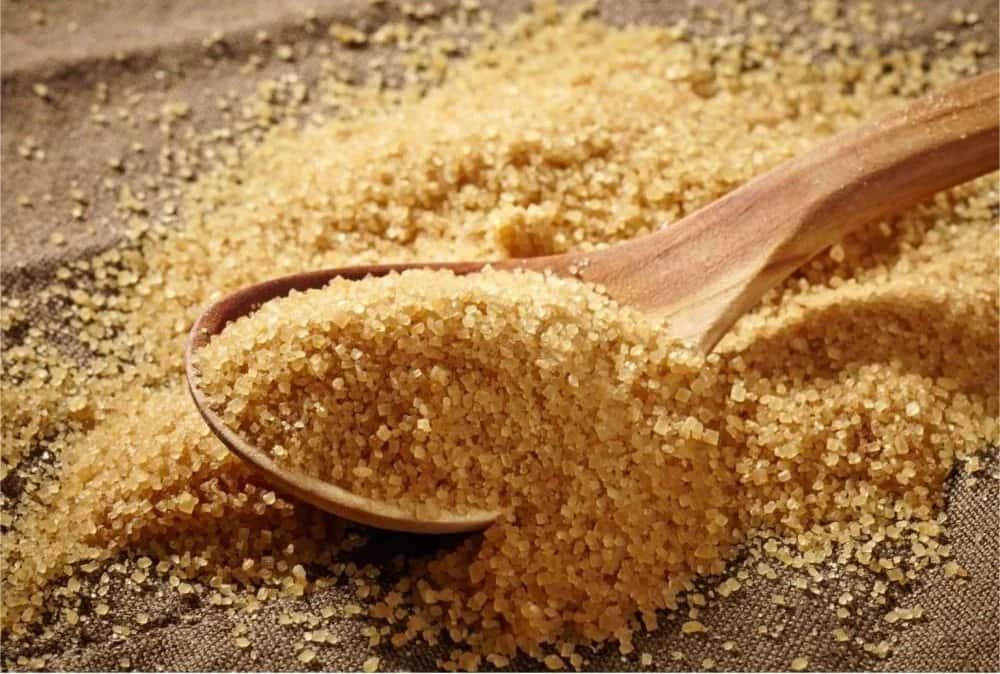
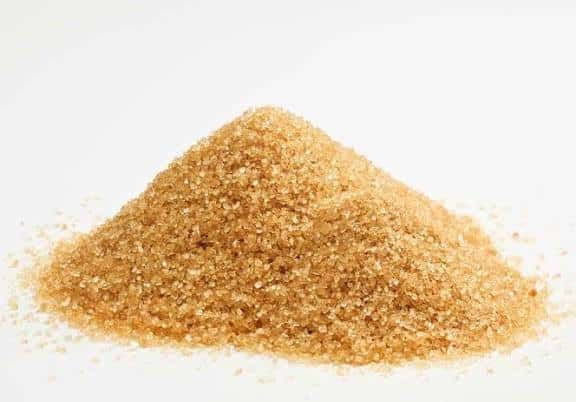
Hi-Pol (high-polarisation) sugar is raw cane sugar boiled and washed to a higher sucrose purity than ordinary raw sugar. For Thailand it is the benchmark raw export grade: S&P Global Platts assesses ‘Thai Hi Polarization’ as raw sugar of fair average quality of the crop with a minimum polarisation of 98.5° on a wet basis at the time of shipment. Under Thai regulation it is still ‘raw sugar’ (≥ 97.00 °Z, ≥ 601 IU) — ‘Hi-Pol’ is a commercial description, not a regulatory class.
Thai raw sugar is overwhelmingly a bulk product: OCSB’s closing report for the 2025/26 season shows 8,966,287 t of the 9,176,027 t of raw sugar produced in bulk form. Some mills dry and bag Hi-Pol for customers who want it — Eastern Sugar & Cane dries its hi-pol raw sugar before packing it in sacks, and Buriram Sugar’s certified product list includes 50 kg bags of Hi-pol sugar.
The benchmark in detail
| Term | Thai Hi-Pol | Brazil Centre-South VHP |
|---|---|---|
| Quality | Fair average quality of the crop; pol min. 98.5°, wet basis, at shipment | Pol min. 99.00°, max. 99.49° |
| Parcel size | 12,000 t (8,000–12,000 t considered) | Typically 50,000 t |
| Basis | FOB Bangkok, Laem Chabang, Koh Si Chang, Sri Racha | FOB Santos |
| Loading rate | 3,000 t per weather working day | 10,000 t per weather working day |
| Published as | Premium to front-month ICE No. 11, plus outright price; weekly | Premium to ICE No. 11, plus outright price |
| Pol premium in Platts’ Indonesia import parity | 3.75 % | 4.2 % |
Platts also publishes a Thai Hi-Pol forward curve covering the next two 75-day shipment windows. Through the year these windows are 1 March–15 May, 1 May–15 July, 1 July–15 September and 1 October–15 December, rolling forward as ICE No. 11 contract months expire.
How pol premiums work
Pol is priced because it approximates sucrose content. ICE Sugar No. 11, the world raw-sugar futures contract, is based on 96° average polarisation and adjusts the invoice for each degree above or below that basis. The table shows the cumulative allowance at selected readings, calculated from the published schedule, in which fractions of a degree are counted pro rata.
| Pol at final test | Allowance | How it builds up |
|---|---|---|
| 95° | −5.50 % | Deduction for 96° down to 95°; no longer in the schedule from the March 2028 delivery month |
| 96° | 0 | Contract basis |
| 97° | +1.00 % | +1.00 % at 97° |
| 98° | +2.25 % | +1.25 % for the degree from 97° to 98° |
| 98.5° (Thai Hi-Pol minimum) | +3.00 % | Half of the +1.50 % for 98° to 99° |
| 99.0° | +3.75 % | +1.50 % for the degree from 98° to 99° |
| 99.3° (top of the scale) | +4.20 % | +0.15 % for each full 0.1° from 99.0° to 99.3° |
Two things follow. The 3.75 % that Platts applies to Thai Hi-Pol in its Indonesia import-parity calculation equals the cumulative ICE allowance at 99.0°, and the 4.2 % it applies to Brazil VHP equals the 99.3° maximum. And because the allowance is paid on measured pol, testing matters: under No. 11, if buyer’s and seller’s results differ by 0.15° or more, a third sample is polarised by an independent chemist and the mean of the two nearest results becomes the invoice basis.
J-Spec, K-Spec and other customer grades
Some Thai raw grades are named after their market. J-Spec is raw sugar sold to Japanese buyers: KTIS reports in its 2025 One Report selling J-Spec raw sugar to customers in Japan, and Cristalla lists J-SPEC among the specialty raws its Suphanburi mill can make. K-Spec is raw sugar for Korea: KSL’s One Report describes ‘K-Specs’ with pol not exceeding 99.49 on a dry basis and colour not exceeding 3,000 IU, commonly shipped in bulk.
The full parameter sets of these grades are customer specifications rather than published standards, so they are agreed contract by contract. Note the different bases: Platts measures Thai Hi-Pol pol on a wet basis (the sample as shipped, moisture included), while KSL quotes its K-Spec ceiling on a dry basis.
The 2021 colour boundary change
Before 2021, Thai Hi-Pol carried a minimum colour of 1,000 IU and white sugar grade 3 ran from 400 to 1,000 IU. In early 2020 Indonesia — the largest buyer of Thai raw sugar — cut the minimum ICUMSA for its raw-sugar imports from 1,200 to 600. In November 2020 Thailand’s Sugar Committee approved a draft notification re-fixing the sugar grades by pol and colour, with the stated aim of meeting Indonesia’s lower import colour requirement. In April 2021 S&P Global reported, citing an OCSB report, that the minimum ICUMSA for Thai Hi-Pol had been revised to 600 from 1,000, and white grade 3 to 400–600 from 400–1,000.
The current OCSB control manual reflects the result: under the B.E. 2564 notification, raw sugar is 601 IU and above and white grade 3 is 401–600 IU. S&P noted that Brazilian and Indian raw sugar typically runs at 600–1,200 IU — the competition Thai mills were facing in Indonesia.
For buyers the change has two consequences. A Thai Hi-Pol offer between 601 and 1,000 IU is raw sugar under current Thai rules, not mislabelled white sugar. And older producer literature still shows the pre-2021 ranges, such as raw sugar ‘1,001 IU and above’ or white sugar ‘46–1,000 IU’, so confirm the colour band in the current offer rather than in a brochure.
Specifying Hi-Pol
- Pol minimum and basis (the Platts benchmark is 98.5°, wet), plus the allowance scale if the price depends on pol
- Colour band in IU with the ICUMSA method — GS1-7, or the GS9-8 reference method
- Maximum moisture, and bulk or dried-and-bagged supply
- Load port (Platts’ basis covers Bangkok, Laem Chabang, Koh Si Chang and Sri Racha), parcel size and shipment window
- Supervision, sampling and umpire arrangements
See the Hi-Pol raw sugar product page and the high-pol sugar category, compare with VHP sugar, and read FOB vs CFR vs CIF for sugar before fixing delivery terms.
Frequently asked questions
Is Hi-Pol the same as VHP?
They overlap but are not the same. Thai Hi-Pol is benchmarked at min. 98.5° pol on a wet basis; Brazil VHP at 99.00–99.49°. Some Thai mills use ‘VHP’ for their own higher-pol grades. See what is VHP sugar.
What does ‘wet basis’ mean for pol?
The pol is measured on the sample as shipped, moisture included. A dry-basis figure is recalculated without the moisture and so reads higher for the same sugar — always check which basis a specification uses.
Who buys Thai Hi-Pol?
Mainly refiners. Thai raw sugar exports in calendar 2025 went chiefly to Indonesia, South Korea, Vietnam and Japan, and USDA notes that Indonesia and Korea both have large domestic refining industries.
Can Hi-Pol be shipped in bags or containers?
Most Thai raw sugar moves in bulk, but some mills dry and bag Hi-Pol — Buriram Sugar lists 50 kg bags. State the packing you need in your enquiry.
Why do some Thai specifications say raw sugar is above 1,000 IU?
They predate the 2021 change. Thailand lowered the minimum colour for Hi-Pol from 1,000 to 600 IU; the current raw sugar class is 601 IU and above.
Sources & references
- Trade pressSpecifications Guide: Global Sugar (August 2023) — S&P Global Platts
- GovernmentKM: factory-unit cane and sugar production control manual (sugar types and quality, Cane and Sugar Board notification B.E. 2564) — Office of the Cane and Sugar Board (OCSB)
- GovernmentClosing report (ฉบับปิดหีบ), national cane and sugar production 2568/69 (2025/26) — Office of the Cane and Sugar Board (OCSB)
- RegulatorSugar No. 11 Rules (Chapter 11 rulebook) — ICE Futures U.S.
- Trade pressThailand lowers minimum sugar ICUMSA to raise export competitiveness (6 April 2021) — S&P Global Commodity Insights
- Trade pressSugar Committee approves draft notification fixing sugar types and quality (18 November 2020) — InfoQuest
- GovernmentThailand: Sugar Annual (GAIN report TH2026-0011), 20 April 2026 — USDA Foreign Agricultural Service
- RegulatorKTIS Form 56-1 One Report 2025 (English), filed with SEC Thailand — Kaset Thai International Sugar Corp. PCL / SEC Thailand
- Standards bodyICUMSA Method GS1-7 (2024) — abstract — ICUMSA
- Standards bodyICUMSA Method GS9-8 (2026) — abstract — ICUMSA