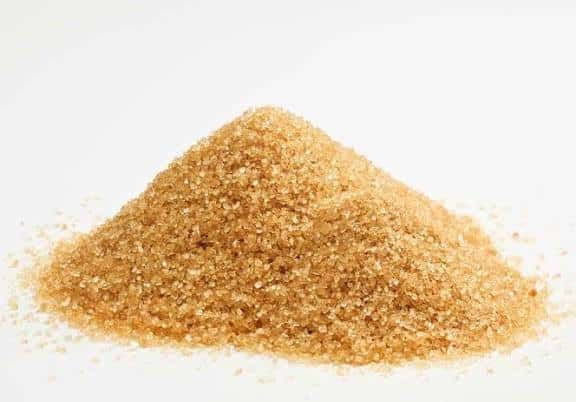
Dry sugar keeps; damp sugar does not
Crystalline sugar is one of the more forgiving foods to store — as long as it stays dry, clean and away from smells. The German insurers’ Transport Information Service (TIS-GDV) states that at 20 °C and relative humidity (RH) below 70 %, white sugar has a storage life measured in years, so storage time is not the limiting factor when temperature and humidity are right. The problems come from moisture, temperature swings, odours, contamination and rough handling, and they are costly: the UK P&I Club reports substantial claims on bagged refined sugar for stickiness and caking, sometimes wrongly blamed on the voyage.
Humidity and temperature targets
| Factor | White / refined sugar | Raw sugar |
|---|---|---|
| Recommended relative humidity | 55–65 % | 65 % (listed storage climate) |
| Above about 70 % RH | Syrup formation, tackiness, mould and yeast growth | Sticking together, syrup formation, loss of flowability, mould and yeast growth |
| Below about 50 % RH | May harden, cake and lose flowability | May harden and cake; solid layers can form |
| Flow moisture point | About 85 % RH | About 80 % RH — crystals start to deliquesce |
| Water content of the sugar | 0.03–0.05 %; load only below 0.05 % (below 0.03 % for longer voyages) | 0.25–1.1 % |
| Temperature | No lower limit; keep at or below 25 °C and avoid swings | No lower limit; keep at or below 25 °C; do not accept sugar loaded above 48 °C |
The sugar’s own moisture matters as much as the air around it. TIS-GDV explains that sugar’s hygroscopicity comes from the syrup film on each crystal: up to 60 % RH the water content of white sugar rises only slightly, to about 0.04 %, but between 60 and 80 % RH it rises markedly to above 0.08 %. Once water content passes 0.05 % and RH exceeds 75 %, yeasts and moulds can begin inverting sucrose — which shows up as rising invert sugar on a re-test.
Why sugar cakes — and how to prevent it
When bagged sugar arrives lumpy, the UK P&I Club distinguishes three conditions:
- Pressure compaction — caused by the weight of sugar in high stacks; it breaks up when the bags are handled.
- Adhesiveness (stickiness) — the result of too much moisture, present at bagging or picked up afterwards.
- Caking — hard lumps formed when over-moist sugar dries out again. Caking that spreads from the centre of the bag points to excess moisture at packing; caking at the bag mouth points to outside moisture, such as cargo sweat, or to hook damage.
Prevention starts before the sugar reaches you. After production, sugar is normally ‘conditioned’ or ‘matured’ in ventilated storage so that its moisture is low when it is bagged. Sugar bagged at 0.02 % moisture or less carries no risk of caking from moisture migration, and the club warns that a ‘0.1 % maximum’ contract term should not be assumed adequate. In storage, keep temperatures at or below 25 °C and avoid swings: warming releases water vapour, and recrystallisation then sticks crystals together.
Condensation is the other enemy. Sugar has low thermal conductivity and stays close to its loading temperature, so bags loaded cold and discharged somewhere hot can sweat if they are below the dew point of the outside air; the UK P&I Club advises rapid discharge in that case. In closed containers, moisture from the cargo, its packaging and wooden floors can condense on the cold ceiling overnight and drip back, so goods should be loaded as dry as possible.
Odours, contamination and pests
- Odours. Sugar is extremely sensitive to foreign odours, so never store it with odour-emitting goods. TIS-GDV adds that raw sugar, which has a malty smell, should not be stored together with white sugar.
- Hygiene. Stores, holds and containers must be clean, dry and hygienic. Dirty bags lead to serious claims under food-safety law, and moist, dirty, damaged or poorly sewn bags should not be loaded.
- Incompatible cargo. Cargo guidance for raw and loose sugar warns against stowing it with copra, cement or odour-sensitive goods such as coffee and tea.
- Mould and pests. Moist sugar is prone to mould and fermentation, and stored sugar can be attacked by rats, mice, ants, flies and silverfish — pest control belongs in the storage plan.
- Safety. Fermenting sugar can release carbon dioxide at life-threatening concentrations in holds or containers: ventilate and measure gas before entry. Smoking is prohibited, because sugar fires are hard to extinguish.
Stacking and handling
Aboard ship, tight block stowage of refined sugar bags is customary, with stow height limited only by the hold, and a separation of polyethylene, polypropylene cloth or kraft paper between the bags and the ship’s structure is considered sufficient. The trade-off is pressure compaction in tall stacks, which is why the UK P&I Club recommends a packing strategy that controls stacking heights — together with temperature and moisture — at the producing mills.
- No hooks. Sugar bags are marked ‘Keep dry’ and ‘Use no hooks’; hooks tear bags, while plate or bag hooks spread the load.
- Repair torn bags promptly. Spilled sugar exposes the rest to humidity. Sugar bags are slippery, so build stacks carefully to avoid collapse.
- Keep bags off cold, damp surfaces. Use clean sheeting or dry pallets between bags and floors or walls, since condensation forms on cold surfaces and wooden floors release moisture.
- Containers. Under RSA rules, supervisors check that containers are clean, dry, odour-free and fit to receive sugar; in Brazilian practice their walls are usually lined with kraft paper.
- Ventilation. Bagged white sugar in plastic-lined bags normally needs no ventilation, and ventilating cold cargo with warm air can create sweat.
Packaging choice shapes all of this: see the sugar packaging guide, 25 kg vs 50 kg sugar bags and jumbo bag sugar, and for transit, how sugar is shipped internationally.
Shelf life: what the sources actually say
| Source | Statement | Type of source |
|---|---|---|
| TIS-GDV, white sugar | At 20 °C and RH below 70 %, storage life is measured in years; storage time is not a limiting factor if temperature and humidity are right | Cargo-insurance guidance |
| TIS-GDV, raw sugar | Storage time is not a limiting factor if the temperature and humidity conditions are met | Cargo-insurance guidance |
| ICE White Sugar contract | Each bag must show an expiry date at least two years after production, or a validity of at least two years | Exchange contract marking rule |
| Kochergin, ISSCT 2010 | Even VHP raw sugar can double its colour in long-term storage, although the sugar met accepted safe-storage criteria (safety factor below 0.25, temperature below 30 °C) | Research paper |
In short, dry crystalline sugar has no fixed shelf life, but the two-year bag date is a contract and labelling convention that buyers and their customers may still apply. Raw sugar can drift in quality during long storage even when conditions look safe, so re-check colour and pol before use. When you request a quotation, ask for the production date of the lot offered.
Frequently asked questions
What humidity should sugar be stored at?
TIS-GDV recommends 55–65 % relative humidity for white sugar. Above about 70 % sugar turns tacky and can grow moulds; below about 50 % it can harden and cake.
Does sugar expire?
Dry crystalline sugar keeps for years at 20 °C and below 70 % RH, according to TIS-GDV. Bags usually carry a date anyway — the ICE White Sugar contract requires an expiry at least two years after production.
Why has my sugar caked?
Usually because of moisture: too much at bagging, or outside moisture such as condensation that later dried out. Pressure compaction from high stacks looks similar but breaks up with handling. Check the moisture on the COA and the storage humidity and temperature history.
Does bagged sugar need ventilation in a container?
Not normally. Plastic-lined bags protect white sugar from water-vapour exchange, and the UK P&I Club notes that ventilating cold cargo with warm air can cause sweat. Keep containers clean, dry and odour-free instead.
Can raw sugar and white sugar be stored together?
TIS-GDV advises against it: raw sugar has a malty odour, and white sugar picks up foreign odours very easily.
Sources & references
- Industry bodyWhite sugar — cargo information — Transport Information Service (GDV, German Insurance Association)
- Industry bodyRaw sugar — cargo information — Transport Information Service (GDV, German Insurance Association)
- Industry bodyContainer climate — Transport Information Service (GDV, German Insurance Association)
- Industry bodyCarefully to Carry (Consolidated Edition 2023), Chapter 25 — Sugar — UK P&I Club
- Trade pressSugar (raw and refined) — Cargo Handbook
- ReferenceLoading sugar in Brazil: practical guidance (October 2021) — Proinde
- Industry bodyRules Relating to Contracts (edition effective 26 August 2026) — The Refined Sugar Association
- RegulatorICE Futures White Sugar Futures Contract — Contract Rules (Section IIII) — ICE Futures Europe
- ResearchKochergin, V. (2010) Studies of long-term storage of high quality raw sugar, Proc. ISSCT Vol. 27 — International Society of Sugar Cane Technologists