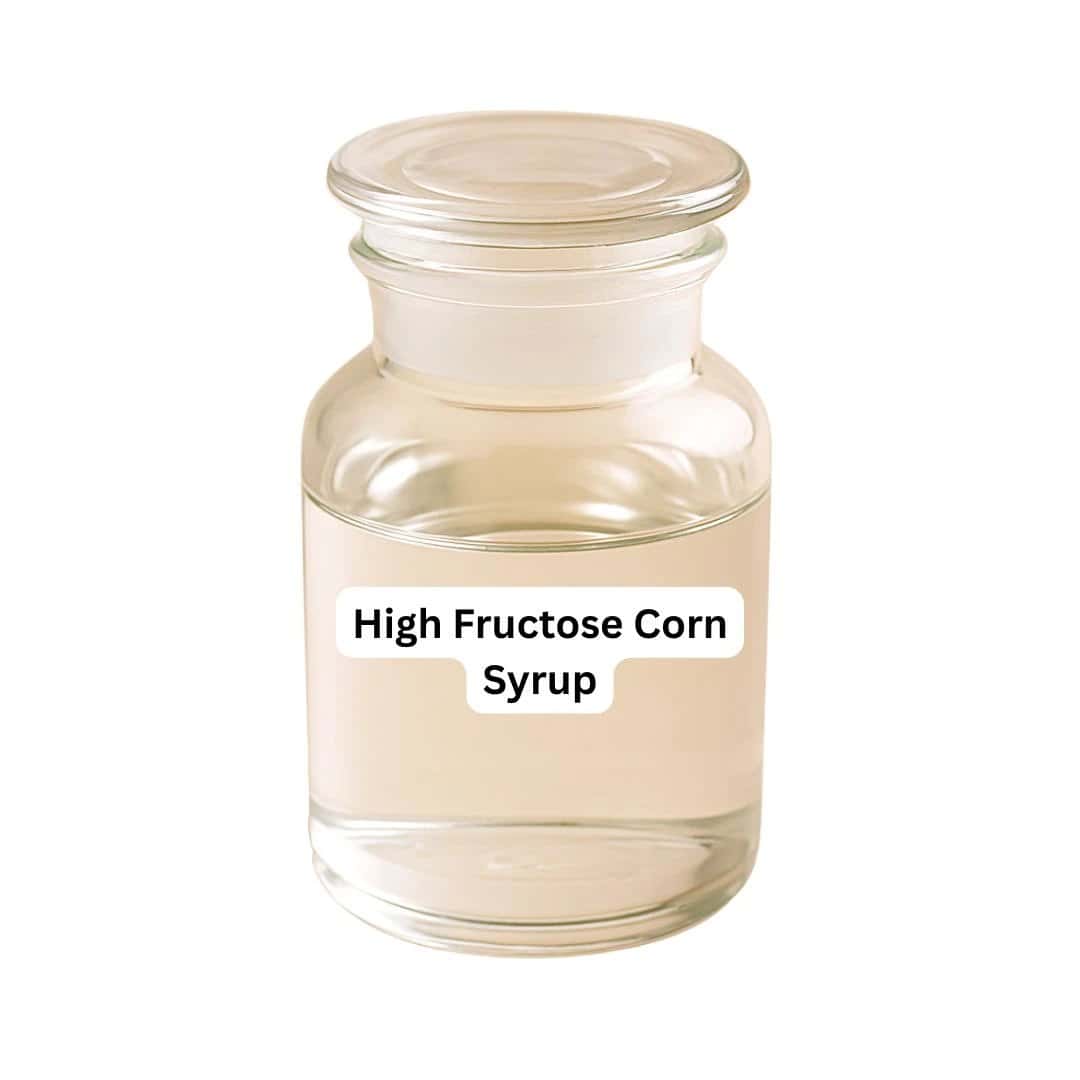
High-fructose syrup (HFCS when made from corn, often HFS when made from tapioca) is sold mainly in two grades named after their fructose content, 42 and 55. They come from the same process and look alike in a tanker, but they are different products. Specifications, sweetness, typical applications, EU labelling and customs classification all differ, and one cannot replace the other without reformulation.
How the two grades are made
Production starts with a high-DE starch hydrolysate, essentially a glucose liquor. Passing it over an immobilised glucose isomerase enzyme converts part of the glucose to fructose, giving HFCS 42. To reach HFCS 55, producers separate a fructose-rich fraction, typically by chromatography, to about 90% fructose (HFCS 90) and blend it with HFCS 42. FDA describes HFCS 55 as prepared from HFCS 42 using standard techniques. Neither grade has a chemical bond between its glucose and fructose, unlike sucrose.
Side-by-side comparison
| Parameter | HFCS 42 | HFCS 55 |
|---|---|---|
| Fructose, dry weight (min.) | ≥ 42.0% | ≥ 55.0% |
| Total saccharides, dry weight (min.) | ≥ 97.0% | ≥ 95.0% |
| Monosaccharides, dry weight (min.) | ≥ 92.0% | ≥ 95.0% |
| Other saccharides, dry weight (max.) | ≤ 8.0% | ≤ 5.0% |
| Total solids (min.) | ≥ 70.5% | ≥ 76.5% |
| Typical composition (fructose / glucose / other) | 42 / 53 / 5 | 55 / 42 / 3 |
| Sweetness vs sucrose | ≈ 92% | ≈ 100% |
| Predominant sugar | Glucose | Fructose |
| EU product name | Glucose-fructose syrup | Fructose-glucose syrup |
| HS subheading | 1702.40 (20% to < 50% fructose) | 1702.60 (> 50% fructose) |
| Typical uses (FDA) | Processed foods, cereals, baked goods, some beverages | Mainly soft drinks |
| US status | GRAS, 21 CFR 184.1866 | GRAS, 21 CFR 184.1866 |
Sweetness and function
HFCS 55 is about as sweet as sucrose, so it is the usual liquid replacement for sugar solutions in carbonated soft drinks. HFCS 42 is a little less sweet, about 92% of sucrose on the Corn Refiners Association's figures, and carries more glucose and higher saccharides. Both grades help control crystallisation, depress the freezing point, raise osmotic pressure and lower water activity. These properties suit frozen beverage concentrates and canned fruit. Higher solids in HFCS 55 (≥ 76.5% vs ≥ 70.5%) also mean less water delivered per kilogram of sweetener.
Where each grade is used
- HFCS 55: soft drinks and other beverages, plus ice cream and frozen desserts.
- HFCS 42: processed foods and cereals in food manufacturing, bakery products, and some beverages.
- HFCS 90: mainly an intermediate for blending HFCS 55.
Labelling and classification
In the EU, high-fructose syrups fall under the market definition of isoglucose, a product from glucose or its polymers with at least 10% fructose in the dry state. For labelling, Directive 2001/111/EC requires glucose syrups with more than 5% fructose to be called "glucose-fructose syrup" when glucose predominates, as in HFCS 42, or "fructose-glucose syrup" when fructose predominates, as in HFCS 55. Codex similarly requires a name reflecting fructose content above 5%. For customs, HFCS 42-type syrups fall under HS 1702.40 and HFCS 55 under 1702.60, which USDA also uses for HFCS-55 trade data. National tariff lines and duty rates vary, so confirm the full code with your broker.
A note on HFCS 90
HFCS 90, typically about 90% fructose, 9% glucose and 1% other saccharides, is a separate product. FDA's 1996 rule affirming HFCS 42 and HFCS 55 as GRAS explicitly left HFCS 90 out. The agency lacked adequate information on residual processing materials, and it noted that HFCS 90's glucose-to-fructose ratio differs substantially from the two main grades. Treat HFCS 90 as its own specification and regulatory question rather than a stronger version of HFCS 55.
Tapioca-based high-fructose syrup from Thailand
In Thailand, starch sweeteners are made mainly from tapioca. The Thai Tapioca Starch Association states that tapioca starch accounts for about 80% of the raw material for sweeteners such as glucose and fructose syrups, and records a 2024/25 cassava crop of about 25.0 million tonnes. The 42 and 55 grade logic is the same whatever the starch. The US GRAS regulation, however, is worded for syrup made from corn starch hydrolysate, so importers into the US should confirm the regulatory basis for tapioca-based syrup with their own compliance team. ANUTIDA states feedstock and origin in each quotation.
What to put in your RFQ
- Grade (42 or 55) and the fructose minimum on a dry basis
- Total solids or Brix, colour and pH requirements
- Feedstock preference and the label name required in your market
- Packaging: drums, IBC totes, flexitank or road tanker, plus monthly volume
- Documents per lot, starting with the Certificate of Analysis
Frequently asked questions
Can HFCS 42 replace HFCS 55 in a soft drink?
Not without reformulation. HFCS 42 is less sweet (about 92% of sucrose vs about 100%), has lower solids and carries more glucose and higher saccharides, so dosage and taste profile change.
Why is HFCS 55 labelled differently from HFCS 42 in the EU?
EU rules name the syrup after the predominant sugar. HFCS 55 has more fructose than glucose (fructose-glucose syrup), while HFCS 42 has more glucose (glucose-fructose syrup).
Is HFS from tapioca the same as HFCS from corn?
The grades are defined by composition, so a 55% fructose syrup is a 55 grade regardless of starch. Labelling rules and some regulations, such as the US GRAS section, refer to the corn-derived product, so state your market when ordering.
Sources & references
- GovernmentDirect Food Substances Affirmed as GRAS; High Fructose Corn Syrup — Final rule, 61 FR 43447 (23 August 1996) — US Food and Drug Administration, Federal Register
- Government21 CFR 184.1866 High fructose corn syrup — US Government Publishing Office / eCFR
- RegulatorHigh Fructose Corn Syrup Questions and Answers — US Food and Drug Administration
- RegulatorRegulation (EU) No 1308/2013, Annex II Part III — EUR-Lex, European Union
- RegulatorCouncil Directive 2001/111/EC relating to certain sugars intended for human consumption (consolidated 18.11.2013) — EUR-Lex, European Union
- Standards bodyStandard for Sugars (CXS 212-1999, amended 2001) — Codex Alimentarius Commission (FAO/WHO)
- CustomsCustoms Tariff 2026 — Chapter 17, heading 17.02 — Canada Border Services Agency
- GovernmentIndonesia: Sugar Annual 2026 (GAIN report ID2026-0014) — USDA Foreign Agricultural Service
- ResearchA Novel Glucose Isomerase from Caldicellulosiruptor bescii with Great Potentials in the Production of High-Fructose Corn Syrup (BioMed Research International 2020) — Hindawi (open access, PMC7178463)
- Industry bodySweetener Comparison Chart — Corn Refiners Association
- ResearchThe Influence of Starch Sweeteners on Functional Properties of Cellulose Fat Mimetics (Polymers 2023) — MDPI (open access, PMC10386183)
- Industry bodyTapioca Utility — multiple uses of tapioca starches — Thai Tapioca Starch Association
- Industry bodyTapioca Production (crop-year statistics) — Thai Tapioca Starch Association