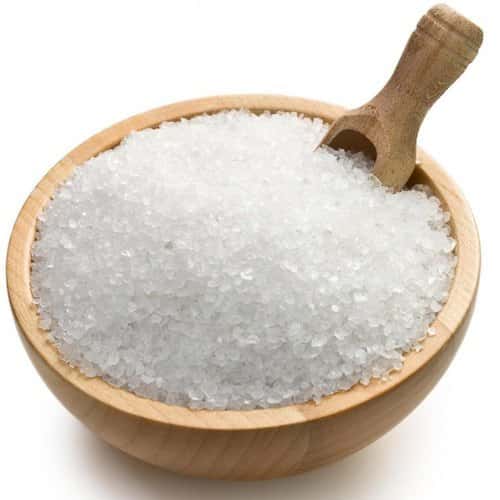
ICUMSA 100 is white sugar with a colour of 100 ICUMSA units or less — a buyer and producer specification tier, not a limit set by any of the main sugar standards.
Last reviewed 6 October 2026 · 10 public sources cited
Definition
ICUMSA 100 means white sugar whose colour in solution is 100 ICUMSA units or less. It sits between refined sugar (45 IU) and plantation white sugar (150 IU) and is used by buyers who want a whiter sugar than the plantation-white ceiling while staying with mill white sugar. As with any ICUMSA number, it fixes colour only.
A specification tier, not a standard
ICUMSA 100 is not a limit in any of the main sugar standards. It does not appear in the Codex Standard for Sugars (60 IU for white sugar, 150 IU for plantation white), the ICE White Sugar contract (45 IU), the Thai Cane and Sugar Board classes (boundaries at 45, 200, 400 and 600 IU), India's IS 5982 (150 IU), EU sugar law (about 45 IU) or Indonesia's import classes (75 and 300 IU). ICUMSA 100 exists because buyers and producers write it into their specifications.
The clearest precedent is Brazil, whose crystal-sugar types include a class of 100 IU maximum, sold as Tipo 1 by producers such as Copersucar and Cosan. In Thailand, KSL's website lists its white sugar at 46–100 IU with pol of at least 99.80, while KSL's 2025 annual report describes white sugar as 46–200 IU at 99.50 minimum — a good example of why the contract, not a label or brochure, must carry the figure.
ICUMSA 100 and Thai white sugar
Under Thai rules, 100 IU falls inside white sugar grade 1 (46–200 IU, pol ≥ 99.50 °Z). ICUMSA 100 sugar from Thailand is therefore grade 1 mill white sugar produced and selected to a tighter colour ceiling. The table shows where it sits:
At 100 IU, colour is measured with ICUMSA GS2-9 (20–600 IU, pH 7.0) or the reference method GS9-8. Because no standard stands behind the number, the contract has to carry every limit:
Colour: 100 IU maximum and the ICUMSA method.
Polarisation: at least 99.50 °Z (the Thai grade 1 floor), or higher if agreed.
Moisture, conductivity ash and reducing sugars: from your own specification; the Codex plantation white values (0.1% each) are a fallback reference.
Granulation, packaging and inspection: crystal size, bag type, marking and independent sampling at loading.
When you compare ICUMSA 100 offers, check whether 100 IU is stated as a guaranteed maximum or as a typical value. Producer documents may publish ranges (such as 46–100 IU) rather than lot results; only a contract maximum, verified on the Certificate of Analysis by the agreed method, protects the buyer.
When to choose ICUMSA 100
ICUMSA 100 suits buyers whose products need whiter sugar than plantation white but not refined quality. Thai producers recommend white sugar for carbonated beverages, processed food and household use, and refined sugar where very high purity is required; ICUMSA 100 lets a buyer tighten the colour of white sugar without moving to the refined class. To buy, see ICUMSA 100 white sugar for the specification sheet and packaging.
Thai white cane sugar contracted at 100 IU or less — a buyer and producer tier inside Thai white grade 1 for users who want whiter sugar than standard mill white without moving to refined.
No. ICUMSA 100 is not a limit in Codex, the ICE White Sugar contract, Thai regulation, India's IS 5982 or EU sugar law. It is a specification tier agreed between buyer and seller.
Is ICUMSA 100 refined sugar?
No. Refined sugar is 45 IU or less (the Thai refined class also requires at least 99.80 °Z). ICUMSA 100 is mill white sugar inside Thai white grade 1 (46–200 IU).
What polarisation should ICUMSA 100 sugar have?
The number sets colour only. Thai grade 1 white sugar must reach at least 99.50 °Z; agree the minimum, with the test method, in the contract.
How is ICUMSA 100 different from ICUMSA 150?
The defining difference is the colour ceiling: 100 IU against 150 IU. ICUMSA 150 is backed by the Codex plantation white limit; ICUMSA 100 is a tighter buyer specification. See ICUMSA 150.